Digging deeper into health misperceptions
Digging deeper into health misperceptions
November 12, 2026
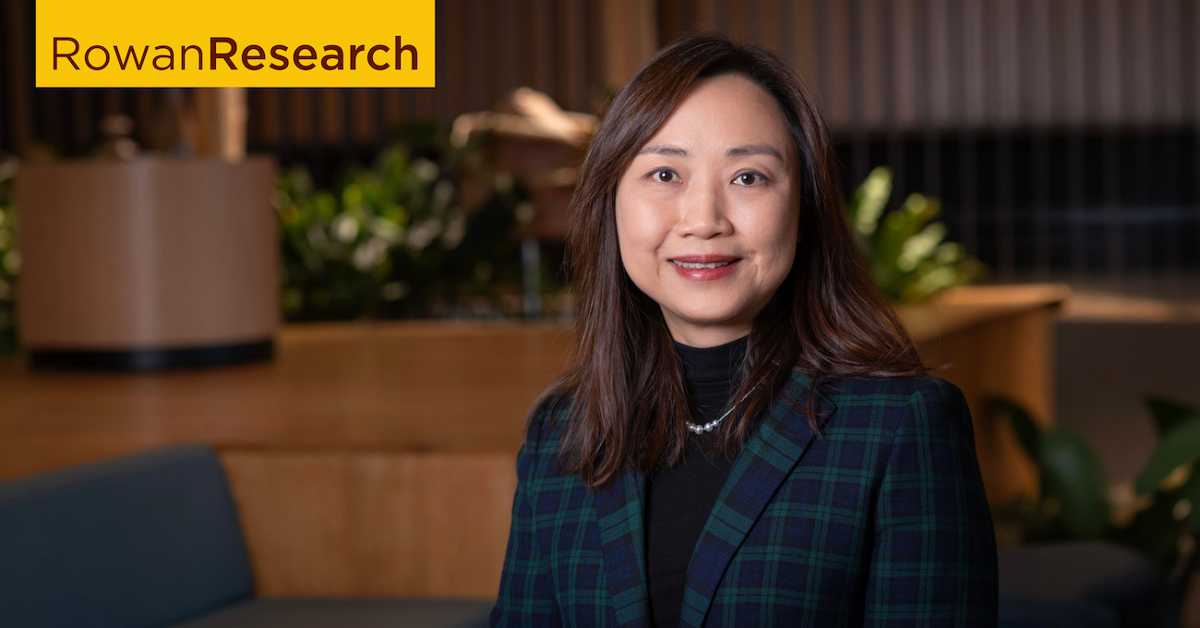
Rui Shi investigates why people believe misinformation and how those beliefs shape their health decisions.
Rui Shi, Ph.D.
Health communication researcher
Areas of expertise:
Campaign evaluation, message design, misinformation correction
How can you persuade a loved one to kick a life-threatening habit?
Rui Shi, associate professor of communication studies in the Ric Edelman College of Communication, Humanities & Social Sciences, has devoted her professional career to answering that very personal question. Driven by her father’s refusal to stop smoking, she embarked on a crusade to discover how to convince people to change their behavior, particularly in the face of compelling falsehoods.
For more than a decade, Shi has worked with public health officials to evaluate tobacco campaigns and understand audience targeting. She helps develop corrective messages advising that nicotine is addictive but not carcinogenic, and that organic tobacco and smokeless tobacco products are not safe alternatives.
During what she calls the “COVID-19 infodemic,” Shi started asking how misperceptions about society and institutions can lead people to trust health misinformation. Rather than following the traditional path of organizing misinformation by health topics such as cancer, viruses, tobacco, alcohol, food and exercise, she examined its underlying structure to create a classification system based on people’s beliefs.
Shi collected more than 150 pieces of misinformation on diverse topics, then asked people how much they believed each statement was true.
The responses revealed four belief categories. The first includes reasons people blame capitalism for their health issues. The second addresses the alleged purity of organic and natural foods, drinks and supplements. Misperceptions about whether it's safe to consume potentially dangerous substances in moderation comprise the third cluster. The last category encompasses blaming conditions such as depression or drug addiction on a lack of willpower.
“When we chase individual pieces of misinformation, we have to keep crafting new messages, and we’re never going to be as fast as the people producing that misinformation,” she explained. “But when we look at the fundamental drivers, we can address the basic logic that leads people to fall for the same kinds of misinformation.”
Although Shi’s father eventually died from lung cancer caused by a lifetime of chain-smoking, Shi still finds meaning in the work he inspired.
“Maybe the messages I help design don’t directly get people to quit smoking, exercise or eat healthier,” she said. “But we can plant the seed. Maybe one day they'll adopt healthier behaviors. Maybe it helps shape public policy that encourages them to make better decisions. I see it as pushing people in the right direction.”
Rowan University researchers are passionate about what they do. Find more at Meet Our Researchers.