Teaching critical thinkers: How Rowan prepares veterinarians to care for species they’ve never seen before
Teaching critical thinkers: How Rowan prepares veterinarians to care for species they’ve never seen before
October 15, 2026
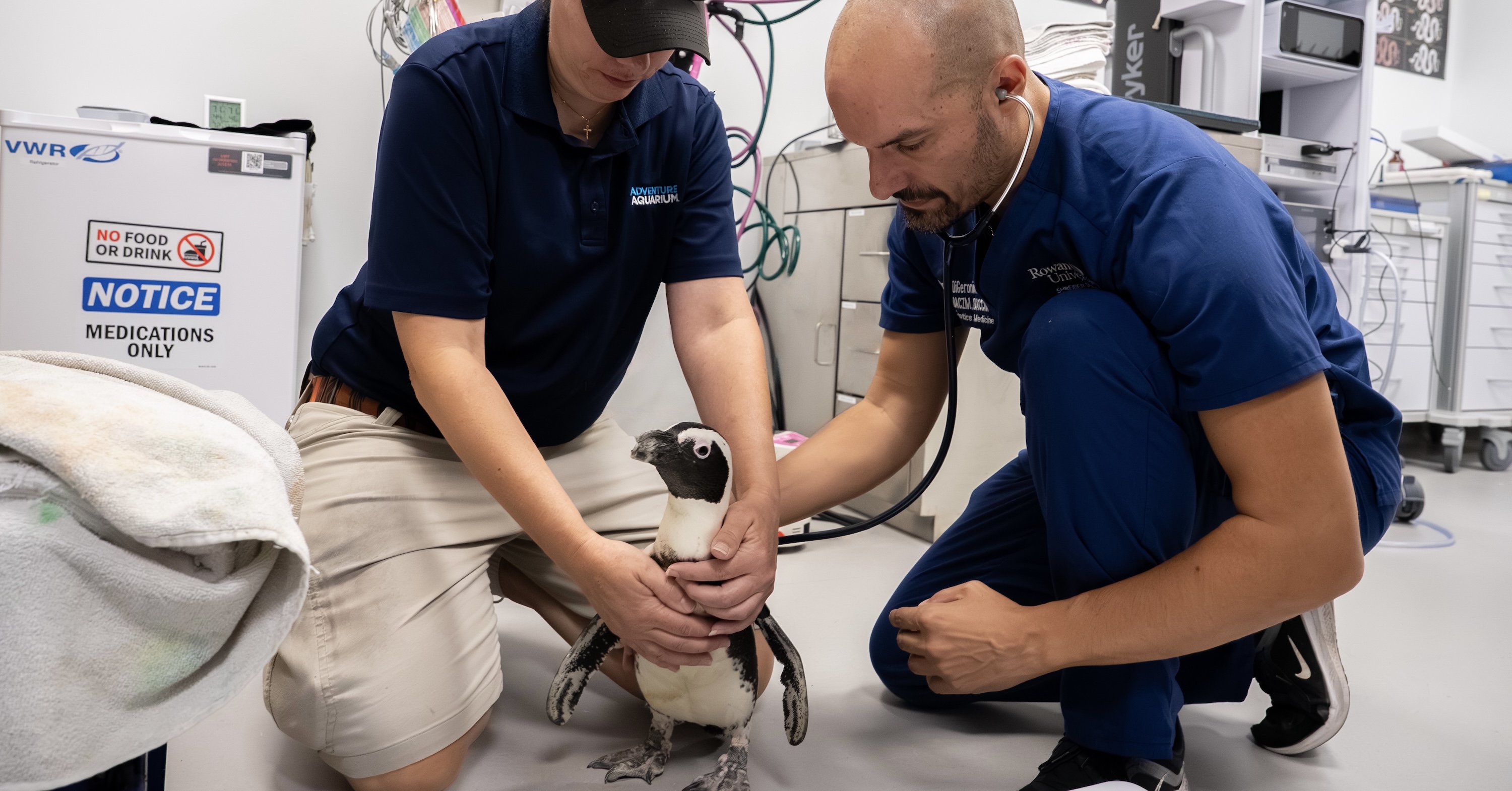
Peter DiGeronimo specializes in the care of exotic animals. Above, DiGeronimo examines an African penguin from Adventure Aquarium at the Shreiber School of Veterinary Medicine.
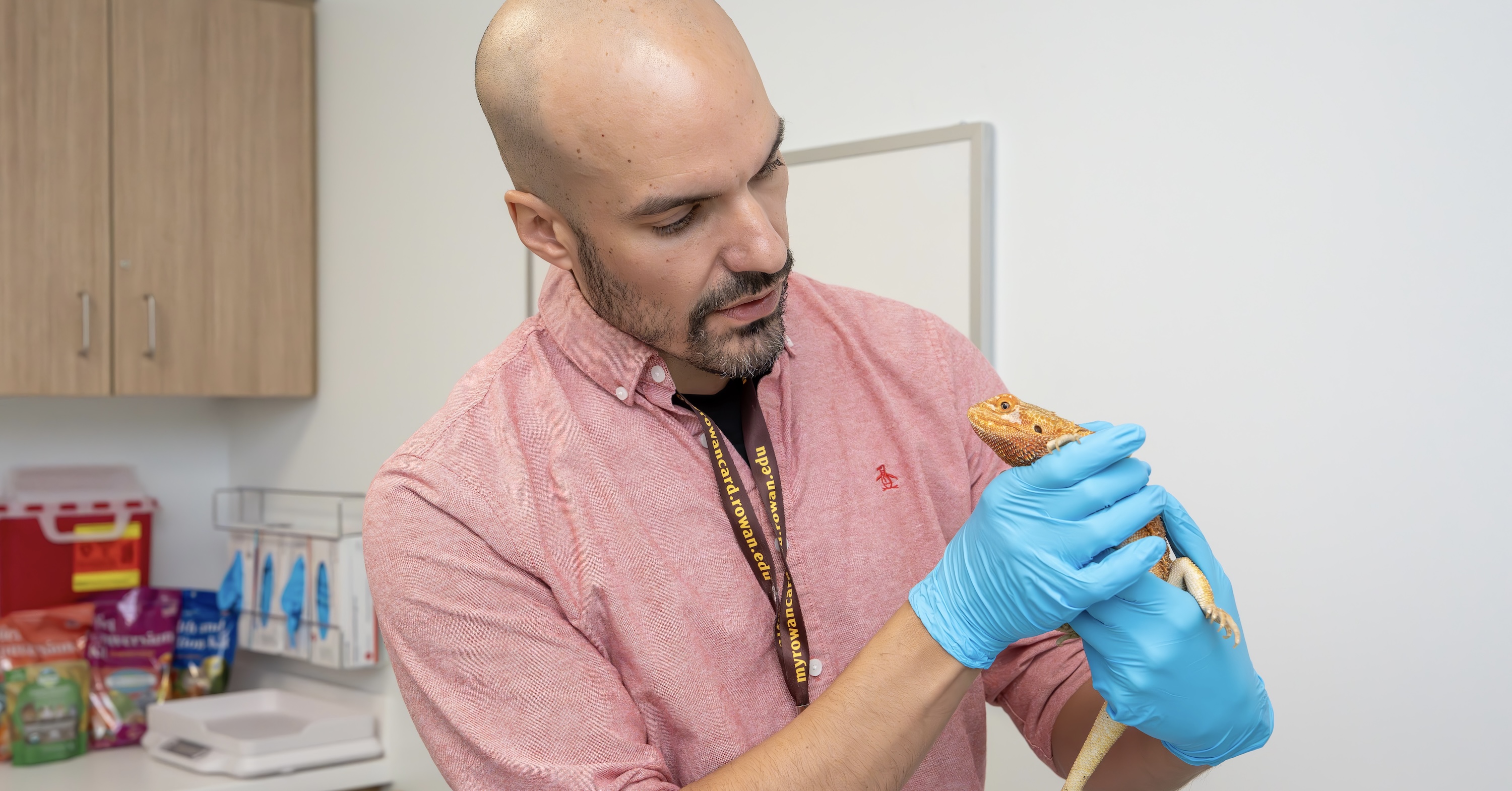
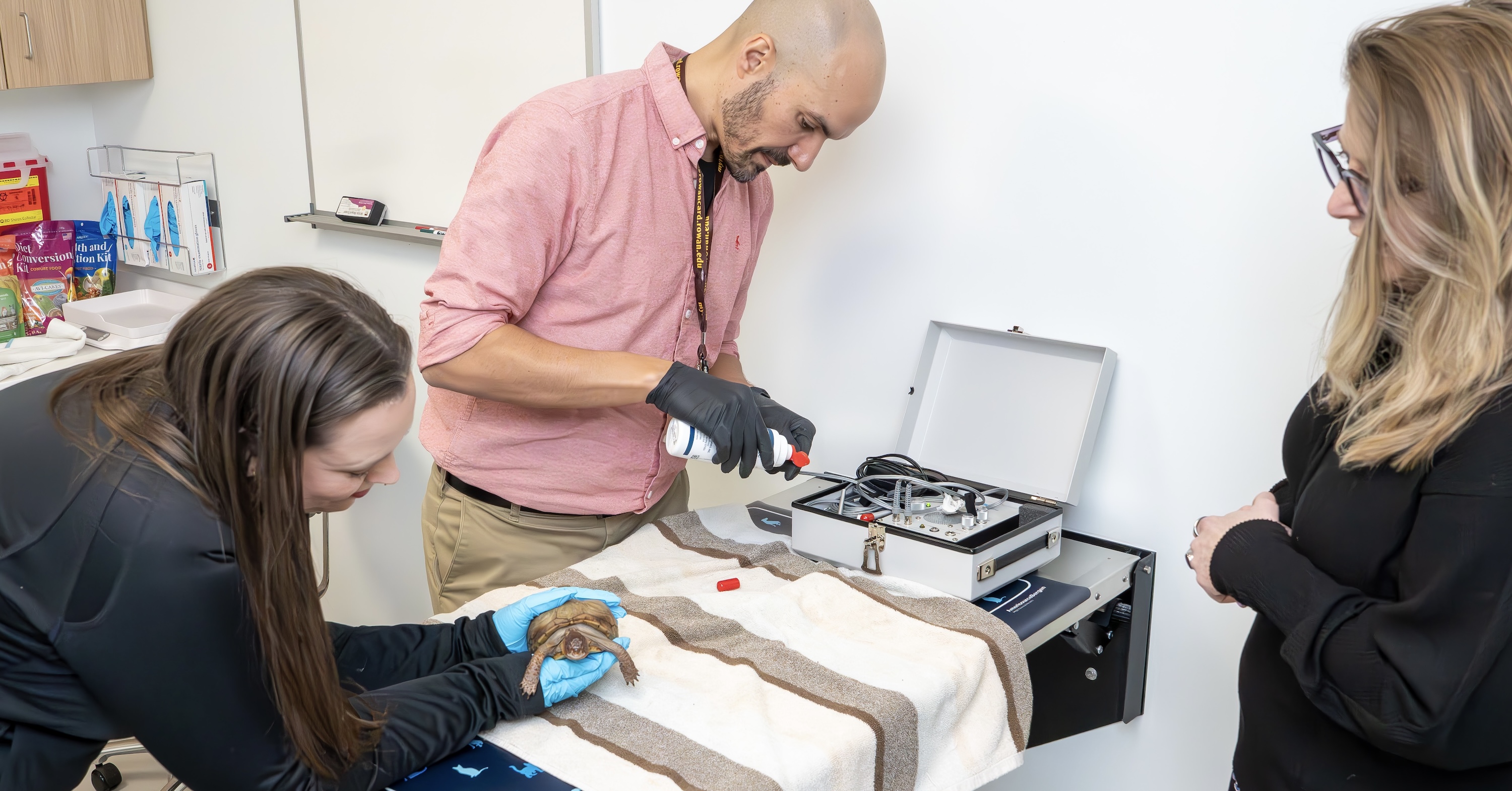
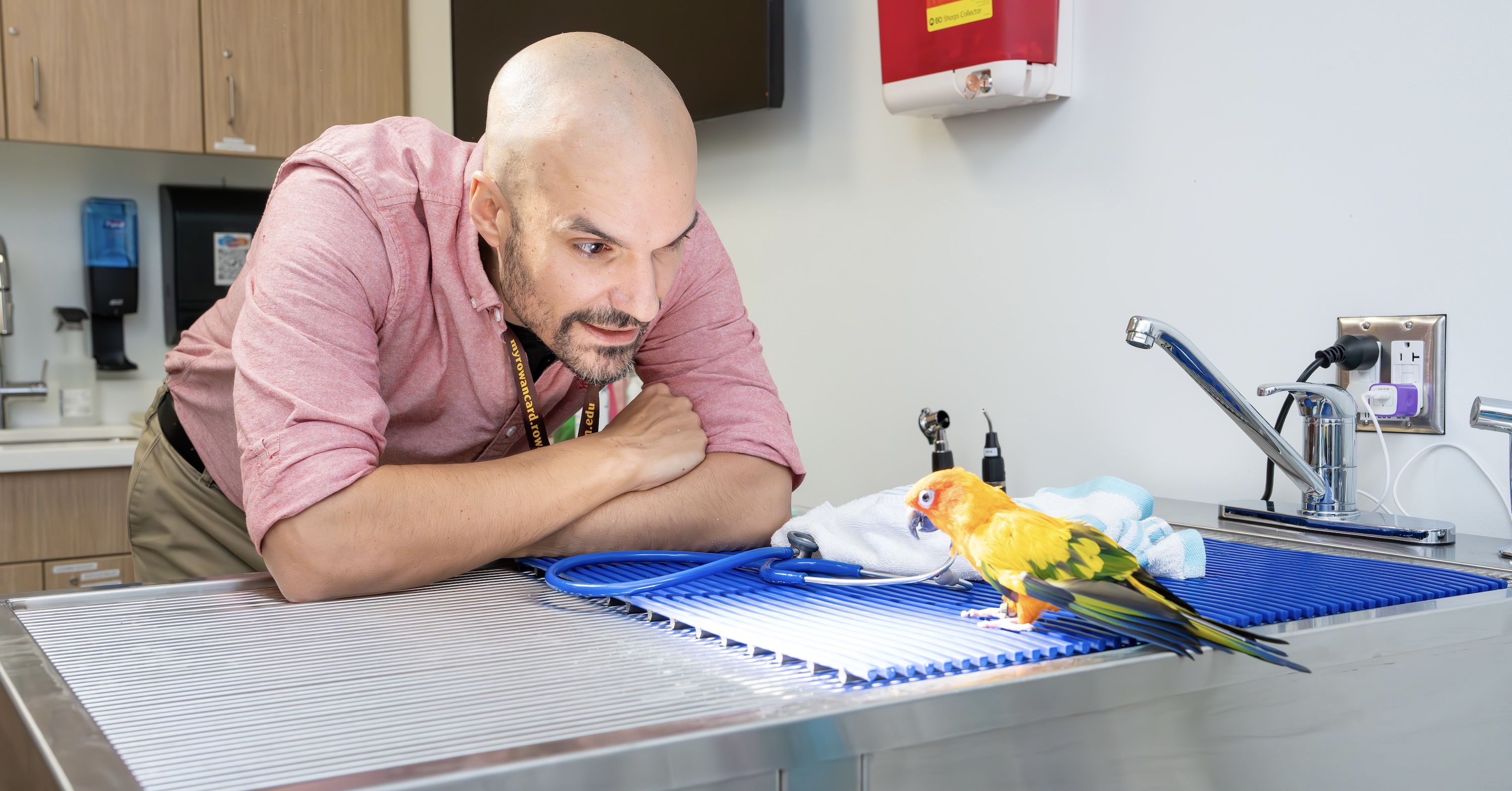
A rabbit arrives for a wellness exam. A bearded dragon needs care. A bird owner has questions about an unusual symptom.
At Shreiber School of Veterinary Medicine, Peter DiGeronimo, VMD, clinical associate professor and service chief of the Zoo & Exotics Service, cares for everything from family pets to animals from zoos and aquariums while teaching future veterinarians.
Growing up in Jersey City, DiGeronimo's interest in animals began with stray cats, pigeons and urban wildlife. "I always knew that I wanted to work with animals in some capacity," he said. Zoological medicine gave him a way to turn that interest into a career centered on animal care and teaching.
Providing care
Treating an exotic animal is rarely as simple as diagnosing a problem and prescribing a treatment.
"You have to look at the whole picture," DiGeronimo said. "How does the family interact with the animal? Where is the animal housed? What does it eat?"
That whole-picture approach reflects the One Health concept, which recognizes the connections among animal, human and environmental health.
As part of Shreiber's teaching hospital, the Zoo & Exotics Service provides wellness, preventive and medical care for a wide range of species and works closely with specialty and emergency teams.
Caring for exotic animals often means working with fewer road maps. A veterinarian treating a dog can often turn to decades of published research and established treatment protocols.
That's not always the case for exotic animals. When an unusual case arises, DiGeronimo may adapt treatments from other species, piecing together evidence to guide decisions for the patient in front of him. He then shares those lessons through case reports and clinical studies that can help other veterinarians.
The same problem-solving skills that guide DiGeronimo's clinical work also shape how he teaches future veterinarians.
Teaching outside the classroom
DiGeronimo believes students learn best by doing and looks for opportunities to help them put their studies into practice.
At Shreiber, students learn through real cases, working alongside veterinarians as they evaluate patients, communicate with pet owners and make decisions about care.
"There's no substitute for experience," DiGeronimo said.
"Have students interacting with patients, interacting with clients and with other people, and allow them to have as much hands-on experience as possible."
Some learning experiences happen outside the classroom and clinic.
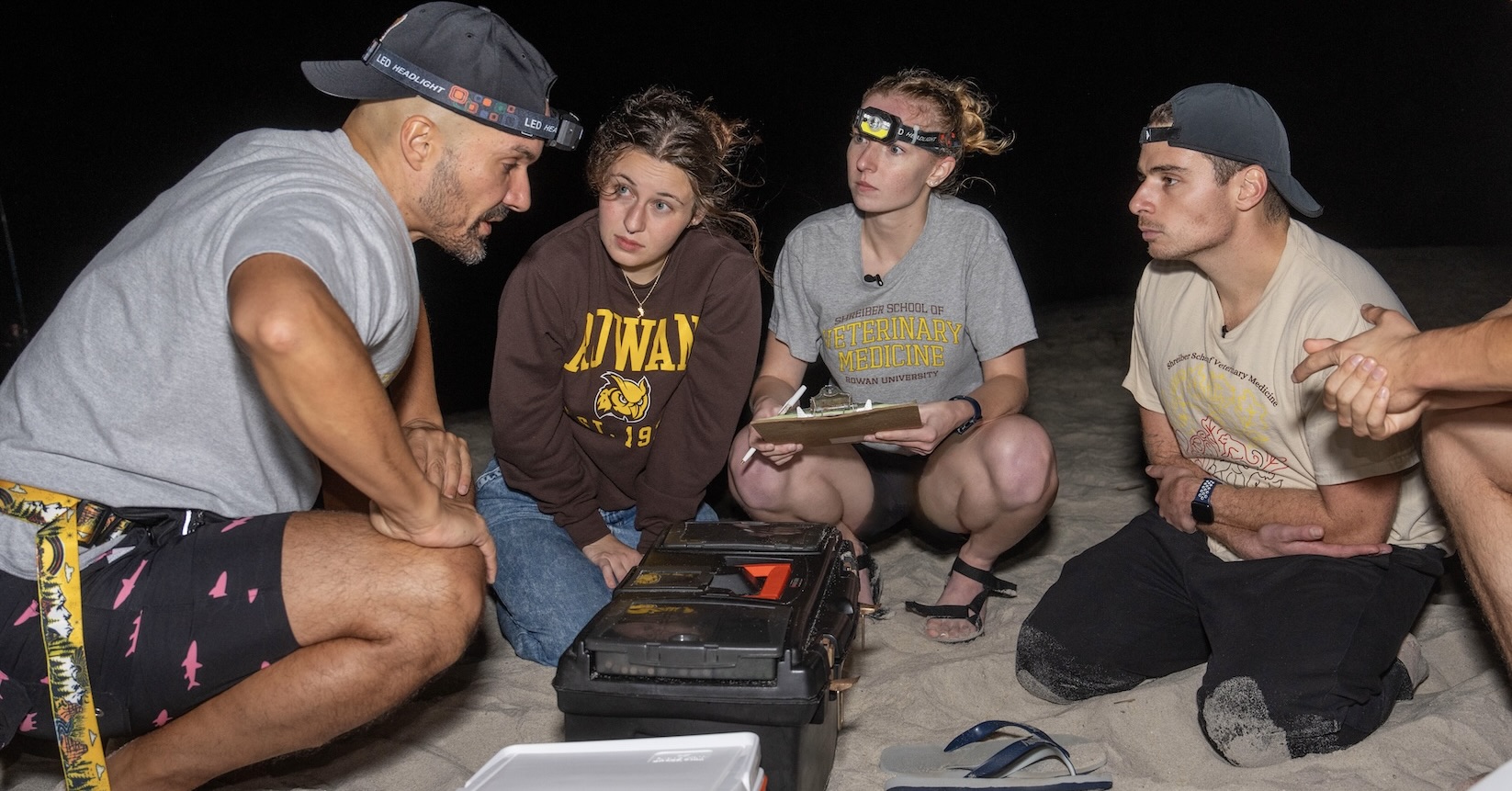
Earlier this year, students joined DiGeronimo on a nighttime shark-tagging project in Cape May as part of a collaborative effort led by Monmouth University to monitor shark migration patterns.
The experience gave students a chance to see a different side of veterinary medicine.
"I want future veterinarians to be good critical thinkers who can apply what they learn to species they may not have encountered before," he said.