South Jersey Institute for Population Health issues 2026 Impact Report
South Jersey Institute for Population Health issues 2026 Impact Report
October 14, 2026
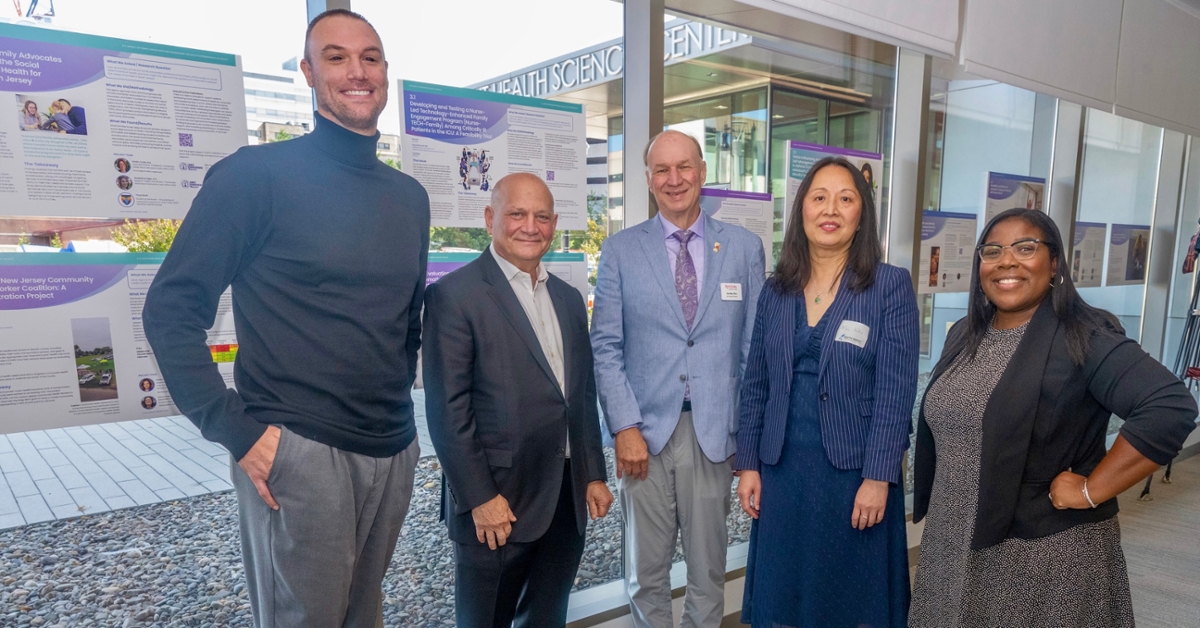
From left, Stephen Danley of Rutgers University-Camden and SJIPH co-lead; Jeffrey Nash, CEO of the Rowan University/Rutgers-Camden Board of Governors; Thomas Risch, vice chancellor for research at Rutgers University-Camden; Mei Wei, vice chancellor for research at Rowan University; and Nicole Vaughn of Rowan University and SJIPH co-lead, during the Oct. 9 event. Below, Vaughn and Danley stand alongside a display of the 2026 Impact Report.
The South Jersey Institute for Population Health (SJIPH) released its 2026 Impact Report during an Oct. 9 event at the Joint Health Sciences Center in Camden, New Jersey.
Established in 2018 through a state grant received by the Rowan University/Rutgers–Camden Board of Governors, SJIPH supports community-engaged research to improve health outcomes across New Jersey's seven southern counties. According to SJIPH faculty co-leads Nicole A. Vaughn, Ph.D. of Rowan University, and Stephen Danley, D.Phil. of Rutgers University-Camden, the institute supports projects driven by community-identified needs across South Jersey, where many health outcomes continue to rank below state and national averages.
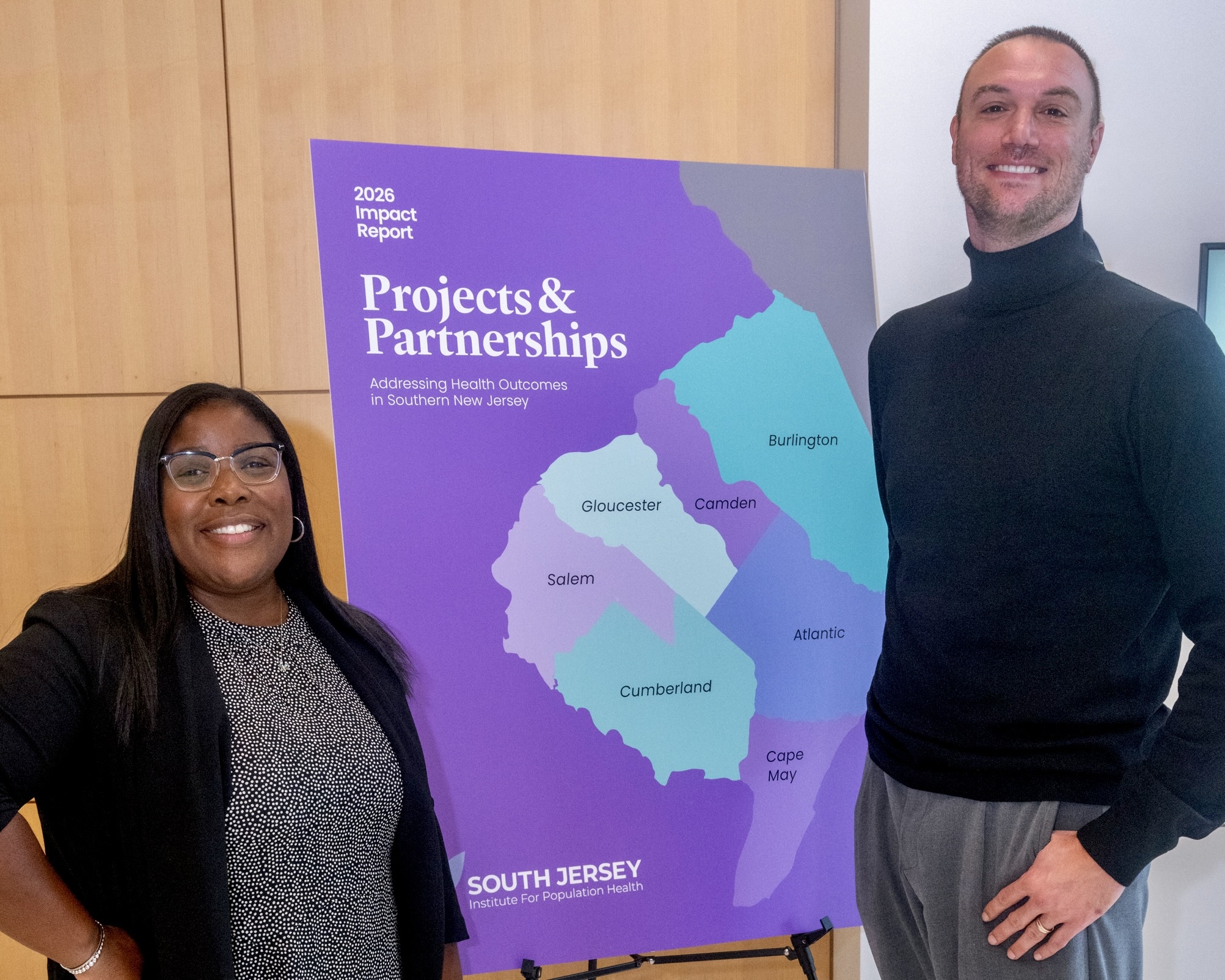
The report presents findings from 10 research projects conducted in partnership with 11 community-based organizations representing nonprofit, academic and healthcare sectors. The projects are part of SJIPH's ongoing funding program, which has provided more than $1.3 million to more than 50 projects to date.
"The collaborative research projects highlighted in this report focus on health outcomes specific to our region and will equip policymakers and community stakeholders with the insight they need to meet these issues head-on," said Jeffrey L. Nash, CEO of the Rowan University/Rutgers-Camden Board of Governors.
One project highlighted in the report examined health needs and barriers to care in Atlantic County. Led by Kristin N. Bertsch, Ph.D., associate professor in the Rowan-Virtua School of Osteopathic Medicine, the study used an online survey and community health screenings to understand residents' health challenges.
Researchers found that health care costs, insurance gaps, transportation challenges and housing insecurity often limited access to care. The study also identified high rates of chronic conditions, including high blood pressure, high cholesterol, diabetes and chronic pain. Based on the findings, the team recommended expanding community-based support, such as a mobile health worker unit, especially in underserved communities to connect residents with healthcare and social services.
Another project, led by John A. Shjarback, Ph.D., associate professor of law and justice studies in Rowan University’s Ric Edelman College of Communication, Humanities & Social Sciences, evaluated a pilot program in Millville, New Jersey, designed to improve police responses to mental and behavioral health crises. The initiative placed a social worker within the police department to connect individuals experiencing mental health, substance use and homelessness-related challenges with support services through officer referrals and a walk-in model.
While the evaluation remains ongoing, researchers reported early signs of change in how Millville's unhoused population engaged with law enforcement and support services, documenting both police referrals and walk-in visits to the program's resource coach.
Other projects in the report tackled issues ranging from environmental health and chronic disease management to community well-being and student success.
The findings from the following 2022 Cycle 2 grant program projects are reported in three focus areas within the full 2026 Impact Report:
Comprehensive Community Well-Being
- Camden Stormwater Heavy-Metal Analysis and Mapping Project (CASH-MAP), led by Mahbubur Meenar, Rowan University
- Developing a Culturally Congruent Survey to Study Trauma, Gun Violence, and Health Among Black Men in Southern New Jersey, led by Daniel Semenza, Rutgers University-Camden
- Feasibility and Efficacy of Lymphatic Therapy in Improving Fluid Overload in Patients With Heart Failure in Camden, led by Rida Gharzeddine, Rutgers University-Camden
- Filipino American Women's Health and Mental Health Needs Assessment, led by Jamille Nagtalon-Ramos, Rutgers School of Nursing-Camden
Promoting Health for Adolescents and Student Success
- Factors Influencing Asthma Self-Management and Disparities in Asthma Control Among Adolescents From Low-Income Minority Families, led by Sangita Pudasainee-Kapri, Rutgers University-Camden
- Finances and Future Health: Understanding Barriers to First-Generation Student Utilization of Federal Work Study, led by Anthony Dissen, Stockton University
Exploring Holistic Health
- Developing and Testing a Nurse-Led Technology-Enhanced Family Engagement Program (Nurse-TECH-Family) Among Critically Ill Patients in the ICU, led by Brigitte Cypress, Rutgers School of Nursing-Camden
- Evaluation of Co- and Alternative-Responding Models for Those Experiencing Mental/Emotional Health Crises in Millville, led by John A. Shjarback, Rowan University
- Impact of Family Advocates and Addressing the Social Determinants of Health for Low-Income Families in South Jersey, led by Kristin Curtis, Rutgers University-Camden
- Southern New Jersey Community Health Worker Coalition: A Demonstration Project, led by Kristin N. Bertsch, Rowan-Virtua School of Osteopathic Medicine
Together, the projects highlight how community-engaged research can help assess and address health challenges across South Jersey.