Teaching teachers: Rowan researcher explores how AI could help educators understand student thinking
Teaching teachers: Rowan researcher explores how AI could help educators understand student thinking
October 5, 2026
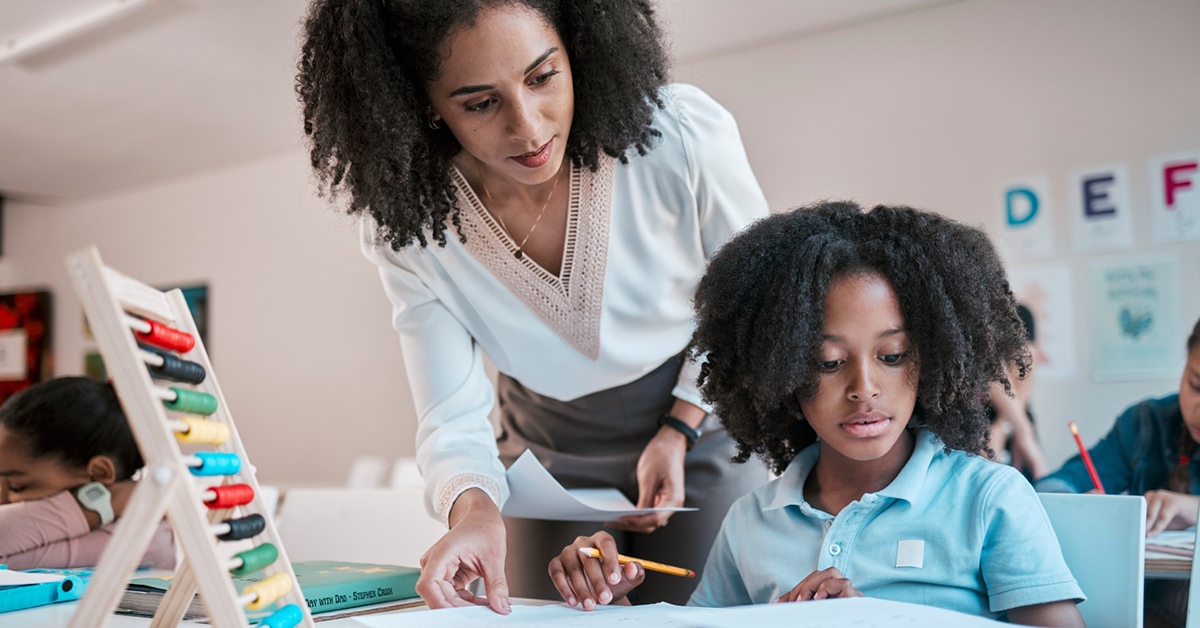
When an elementary school student tackles a math problem, they might count on their fingers, stare at the ceiling while they think or quietly mouth numbers at their desk. To a teacher, these small behaviors offer valuable clues about how a student approaches a problem and where they may need support.
This process, known as professional noticing, refers to a teacher’s ability to pay attention to, interpret and respond to students in real time. These observations happen constantly in the classroom and often shape decisions about instruction and student support.
For Molly Fisher, professor in Rowan University’s College of Education, understanding and improving professional noticing has become the focus of her research.
Supported by a National Science Foundation grant, Fisher and a team from the University of Kentucky are exploring whether artificial intelligence, or AI, can serve as a professional noticing tool for mathematics teachers.

“My team has studied professional noticing for a long time in different environments, such as one-on-one interactions between a teacher and a student as well as whole group settings,” Fisher said. “However, we’ve struggled to develop reliable ways to measure ‘good’ professional noticing.”
Over the years, researchers have developed surveys and assessment tools to help teachers document their professional noticing, but determining what constitutes effective noticing is often left to the discretion of individual teachers and administrators.
“Right now, if I wanted to assess a teacher’s professional noticing skills, I would have to sit in their classroom, observe their teaching, take notes about how they respond to students and then sit down and discuss those observations after the lesson,” Fisher explained.
Using data from previous studies, the team will train AI models to recognize examples of effective professional noticing. Their goal is to develop a tool that can help teachers assess their noticing skills, improve instructional decision-making and better support student learning.
“I think we’re just scratching the surface of something that has the potential to be much bigger down the road,” Fisher said.
She envisions a future where teachers can use AI-powered tools to receive instant feedback on their instruction and classroom interactions, helping them better understand student thinking and respond more effectively to individual learning needs.
As schools continue to navigate the growing role of AI in education, Fisher says educators must be prepared to understand and adapt to the technology.
“As educators, we have to stay up to date on current trends and tools in the classroom,” she said. “AI is already changing the way teachers teach and learn. We need to be prepared for what’s next.”