Tracking sea-level rise over thousands of years
Tracking sea-level rise over thousands of years
October 15, 2026
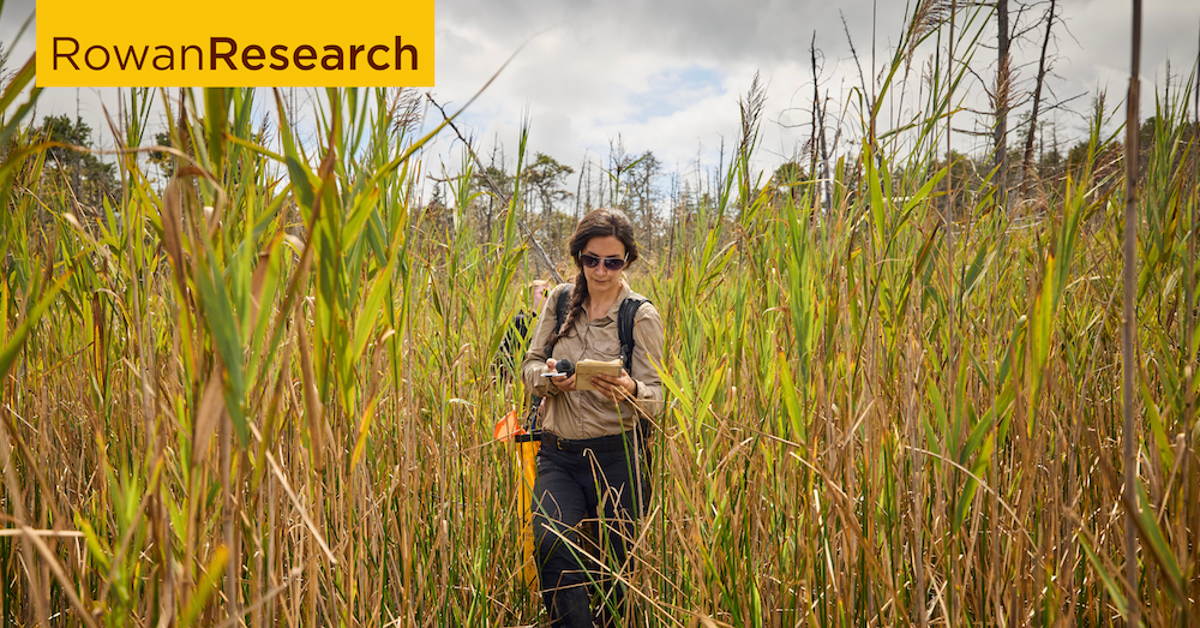
Jennifer Walker conducts field research in a coastal wetland. By studying sediment records, Walker examines how rising seas have transformed New Jersey ecosystems, including the expansion of salt marshes into former forested areas.
Jennifer Walker, Ph.D.
Coastal scientist
Areas of expertise:
Sea-level change, coastal hazards, micropaleontology
Using sediment records, Jennifer Walker, Ph.D., looks into the past—as far back as 5,000 years—to study sea-level change in salt marshes and coastal environments. Walker, an assistant professor of environmental science in Rowan University’s School of Earth & Environment, produces detailed high-resolution records that show how the different processes driving sea-level change vary by location and over time.
“Relative sea-level rise is a much bigger problem now because of modern human-caused climate change,” Walker said. “We’re thinking about all the processes that are going into it and how we can address these different drivers of sea-level change.”
Although sea-level change is a global concern, Walker, who grew up spending summers at the Jersey Shore, focuses most on how it affects the East Coast, particularly New Jersey.
“In the mid-Atlantic, besides the fact that sea level is rising, the land is also sinking,” said Walker. “This makes the effects of sea-level rise even worse in New Jersey.”
With a grant from the New Jersey Department of Environmental Protection, Walker is studying ecosystem transitions resulting from rising sea levels, exemplified by the phenomenon of “ghost forests”: areas where salt water has inundated freshwater forested environments and killed the trees, but they remain standing upright.
“You see ghost forests all over the coast, and they are a really good visual example of sea-level change,” said Walker, who is using the sediment record to track how these forest environments have been replaced by salt marshes over time throughout the state.
Walker also studies broader coastal hazards, including extreme events like tropical cyclones and nor'easters on the U.S. Atlantic coast. Using similar methods, she conducts research as far away as Florida to understand how storm frequency is changing.
Rowan University researchers are passionate about what they do. Find more at Meet Our Researchers.