From microbes to medicine
From microbes to medicine
August 27, 2026
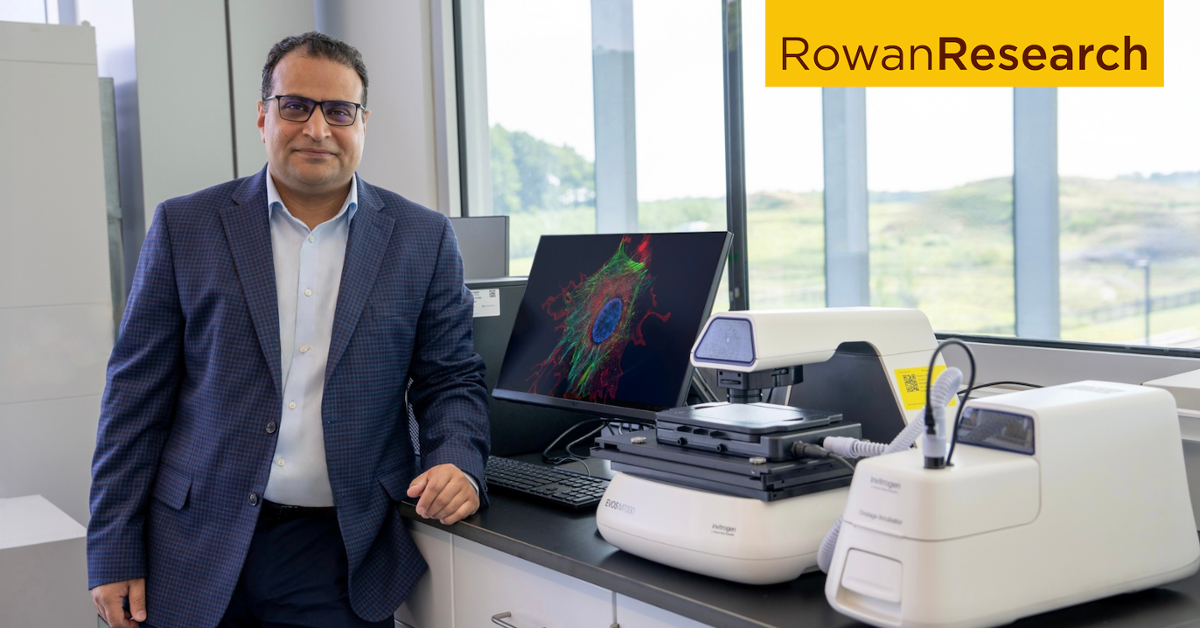
Mohamed Abouelkhair uses AI and bioinformatics to analyze microbial proteins for potential applications in cancer treatment, vaccines and biotechnology.
Mohamed Abouelkhair, DVM, Ph.D.
Immunologist
Areas of expertise:
Immunology, infectious diseases, bioinformatics, microbiology
For most people, microbes are something to avoid. One Rowan University researcher sees them differently. To him, organisms best known for causing disease may also hold clues to treating disease.
Mohamed Abouelkhair, DVM, Ph.D., associate professor of virology and clinical immunology at the Shreiber School of Veterinary Medicine (SSVM), combines expertise in infectious diseases, bioinformatics and AI to better understand how microbes influence health and disease.
He is particularly interested in whether the compounds microbes produce could stimulate the immune system to recognize and attack cancer cells.
Abouelkhair wants to know, as he puts it, "how we can use bugs as drugs."
To answer that question, he looks to the data. Advances in metagenomic sequencing have made vast amounts of genetic information available to researchers like Abouelkhair.
"We have a lot of information, but we don't always know what it means," he said. "AI can help us characterize those proteins and predict what they do."
AI-leveraged research
Using bioinformatics and AI, he analyzes vast datasets to better understand microbes and the proteins and toxins they produce. AI helps predict how those compounds work and whether they can be modified and repurposed for uses ranging from cancer immunotherapy to vaccines and other biotechnology applications. By identifying patterns in large datasets, AI helps researchers narrow possibilities before investing time and resources in laboratory research.
He currently focuses on osteosarcoma, melanoma and mammary gland carcinoma in dogs, analyzing biological datasets to identify compounds with therapeutic potential. Because these cancers share important biological similarities with human cancers, discoveries made in veterinary medicine may also help improve treatments for people. That connection is central to Abouelkhair's research.
An animal-human connection
He approaches his work through a One Health framework, which recognizes the connections among human, animal and environmental health.
With support from the New Jersey Health Foundation, he collaborates with Vincent Manna, Ph.D., assistant professor at the Rowan-Virtua School of Osteopathic Medicine, to study how a family of antibiotics can be repurposed to treat cancer.
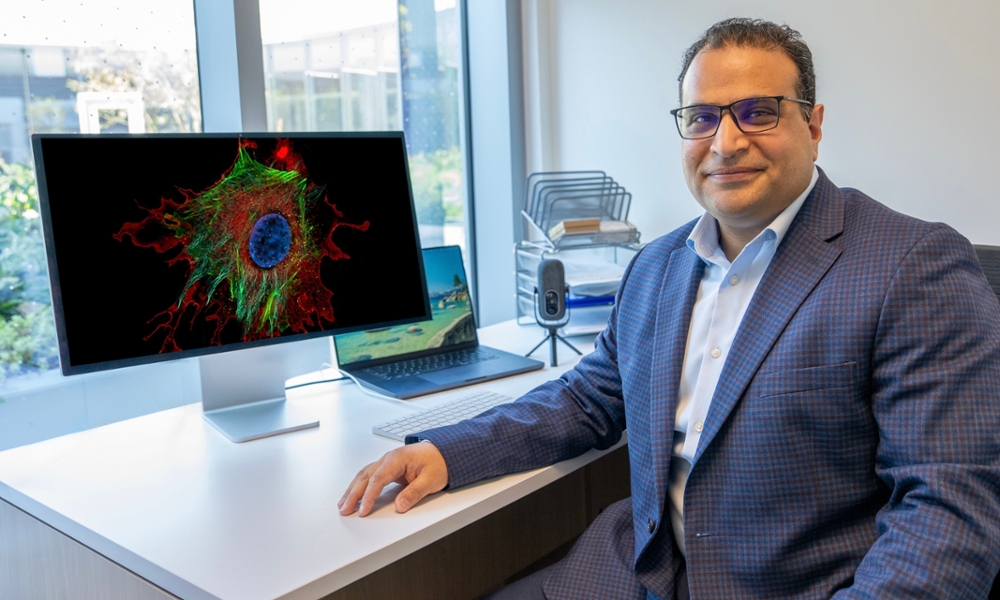
Abouelkhair, a board-certified immunologist and virologist by the American College of Veterinary Microbiologists, mentors a team of undergraduate and graduate students and a postdoctoral fellow, which he credits with connecting his research with the classroom, where he teaches immunology to veterinary students.
Whether the goal is cancer immunotherapy or vaccines, the work is guided by a simple question: How can microbes be used to improve the health of both animals and people?