Turning nanomaterials into smart sensors and devices
Turning nanomaterials into smart sensors and devices
August 6, 2026
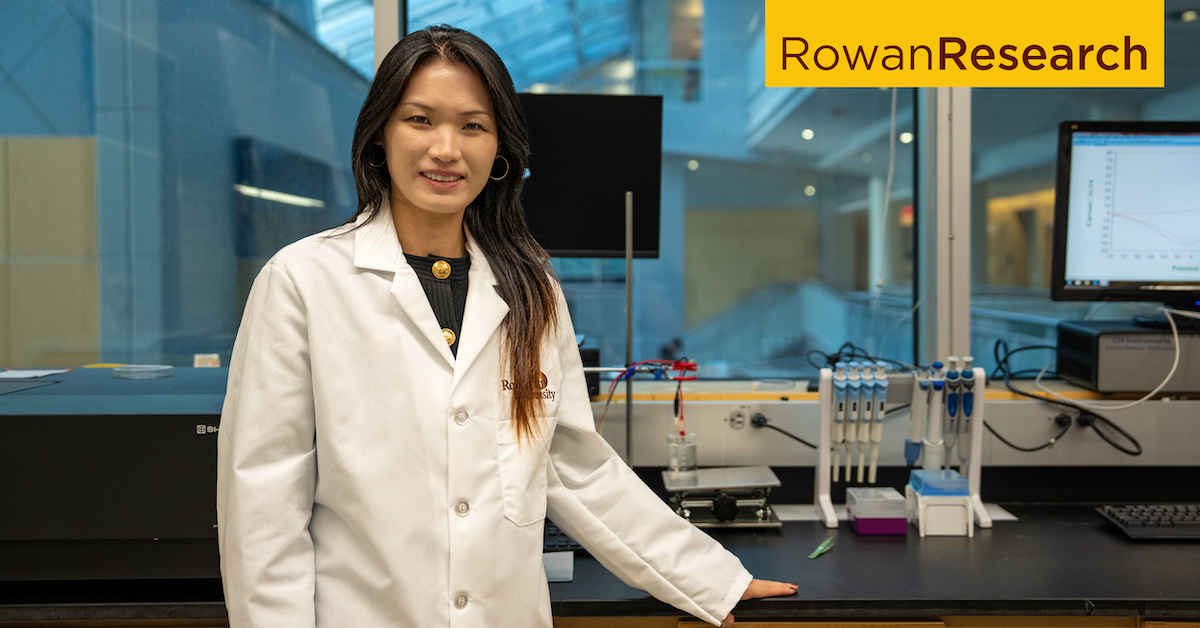
Dongmei Dong uses materials science to develop innovative devices and diagnostic sensors for energy, environmental and health applications.
Dongmei Dong, Ph.D.
Materials scientist
Areas of expertise:
Thin solid films, electrochromic materials, devices and sensors
When Dongmei Dong, Ph.D., an assistant professor in the Department of Physics and Astronomy in the College of Science & Mathematics, says her research is interdisciplinary, she means it. With an undergraduate degree in materials science and engineering, a doctorate in condensed matter physics and postdoctoral work in chemistry, and electrical and computer engineering, Dong’s work is broad and ambitious.
Dong addresses energy, environmental and health challenges through work in three primary areas: electrochromic materials and devices; transistor sensors; and cantilever nanomechanical sensors. The common thread through the projects is using materials science to develop functional devices and diagnostic sensors by harnessing a material’s response to external stimuli.
Electrochromic materials, for example, can enable smart windows that increase opacity in response to daylight and reduce building energy consumption for heating and cooling. Another project, originally funded by the U.S. Department of Energy, uses chemical sensors to study the degradation of hydrogen fuel cells, a critical factor in ensuring long-term efficiency.
Dong also researches cantilevers as nanomechanical sensors, which can detect changes in electric charge or even photothermal input. Different molecules on the surface of the cantilever absorb infrared light at different wavelengths, producing measurable mechanical deflection or resonance. “It’s like molecular fingerprinting or mechanical spectroscopy,” Dong says.
A portable device detects even trace levels of per- and polyfluoroalkyl substances (PFAS) in water in real time. The device, which Dong developed and for which she has filed a patent, works on an electronics transistor sensor.
Dong is excited about the research she pursues because it satisfies her endless curiosity.
“Doing research in academia gives you intellectual freedom,” she says. “When an idea is good and innovative, you can actually make it happen.”
Rowan University researchers are passionate about what they do. Find more at Meet Our Researchers.