Simulating scientific phenomena using computational modeling
Simulating scientific phenomena using computational modeling
August 21, 2026
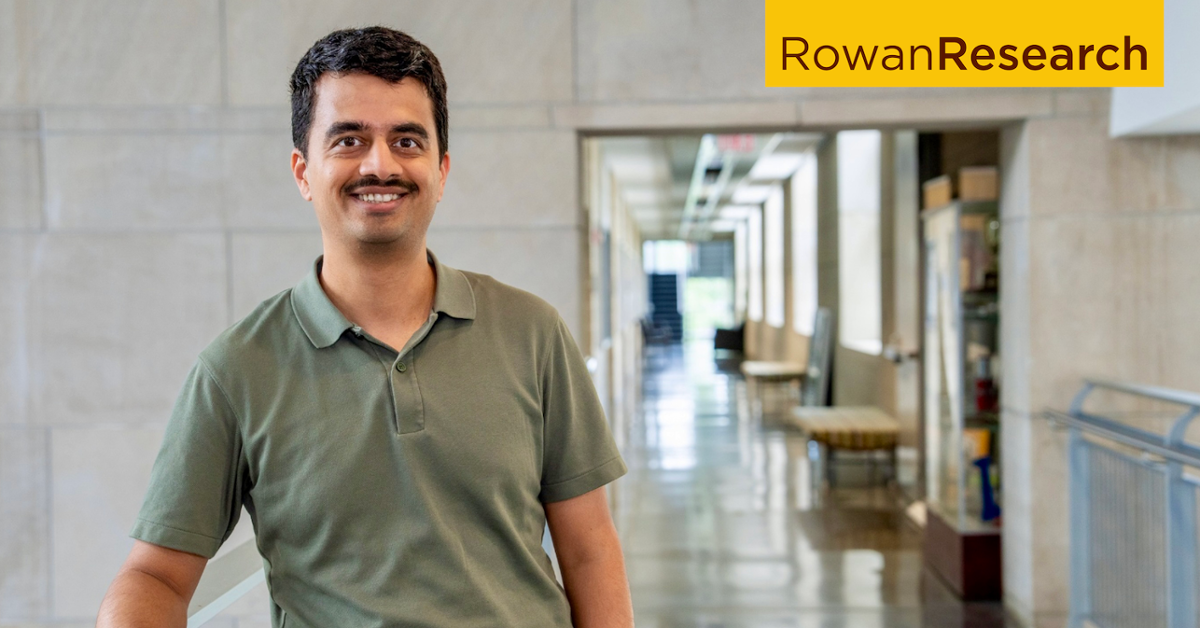
Aditya Lele uses computational modeling and simulations to develop more efficient materials and improve processes, including plastic recycling, to reduce waste.
Aditya Lele, Ph.D.
Mechanical engineer
Areas of expertise:
Machine learning-assisted molecular simulations, multiscale simulations
In society, there are many common problems science aims to solve. For one Rowan University researcher, answering these questions involves a cutting-edge process.
Aditya Lele, Ph.D., an assistant professor in the Henry M. Rowan College of Engineering, utilizes multiscale computational modeling and simulations to address these issues.
“What that means is that whenever you see an engineering process or a scientific phenomenon, we can typically model that using computer simulations,” Lele said.
Lele and his team have expertise in simulating scientific interactions down to the molecular level. By using machine learning methods, Lele can create these simulations faster and more accurately than other methods. Information from molecular scale is then used in device-scale models, an approach referred to as multiscale simulations.
The ability to simulate materials on a microscopic level is particularly useful when it comes to applications like how heat is transferred through semiconductor materials with microscopic defects, which impacts the functionality of semiconductors, a common material in modern electronics.
While Lele is part of Rowan’s Department of Mechanical Engineering, his work is interdisciplinary. For instance, one of the applications of his multiscale simulations is to discover new ways of recycling plastics.
“When you very rapidly burn plastic without oxygen, you can recover the basic building block of plastic polymers. But that process is relatively new and researchers are trying to make it more efficient, so we don't add to plastic waste,” Lele said. “We can simulate that process and give suggestions to experimentalists to maximize the useful products that you get out of plastic recycling.”
These molecular simulations involve new machine learning-based methods that were not available as recently as a decade ago, enabling Lele and his team to understand microscopic-level fundamental science principles and apply them to engineering.
“We now have tools to understand these microscopic processes,” Lele said, “and that's going to eventually enable better materials and better engineering processes in general.”
Rowan University researchers are passionate about what they do. Find more at Meet Our Researchers.