College of Education’s 2026 Summit explores ‘Collective Futures’ in teaching and learning
College of Education’s 2026 Summit explores ‘Collective Futures’ in teaching and learning
May 7, 2026
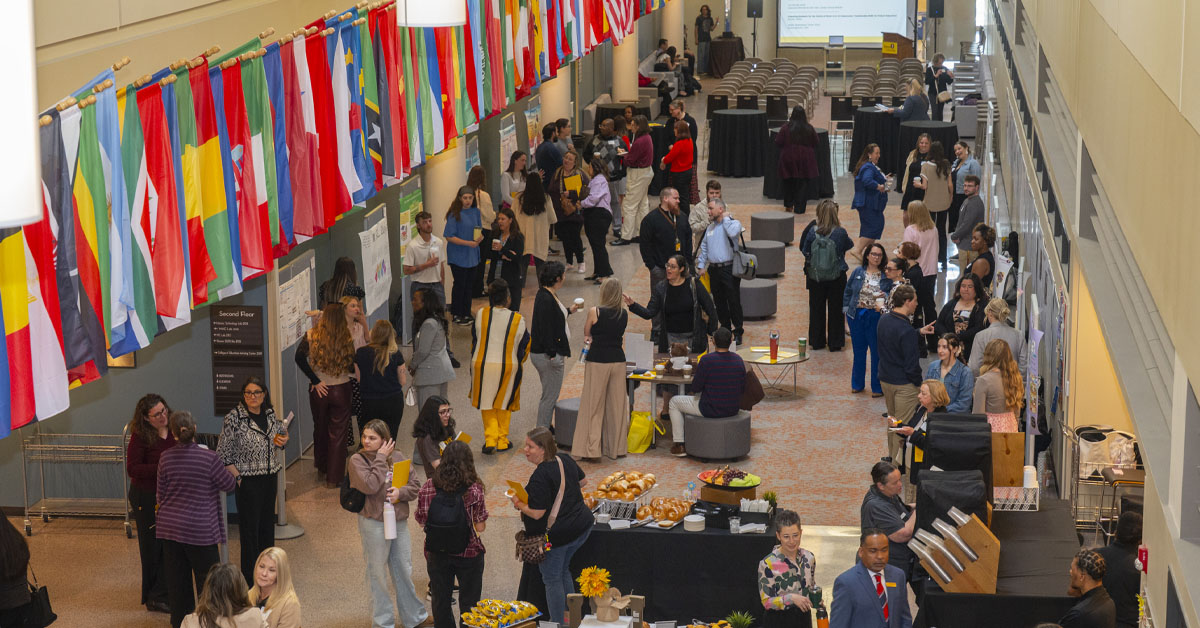
Rowan University’s College of Education convened students, faculty, alumni and community partners on April 28 for the 2026 Education Summit, an annual gathering designed to examine the most pressing issues shaping education today and in the years ahead. Held in James Hall, this year’s summit centered on the theme, “Collective Futures: Community, Criticality & the Future of Education,” emphasizing collaboration, equity and shared responsibility for educational change.
The summit opened with welcoming remarks from Tyrone McCombs, Ph.D., executive director of Rowan’s Center for Access, Success & Equity (CASE), who thanked the College of Education community and its partners—including the Diversity in Action Committee and Project THRIVE—for their collective efforts in bringing the event to life.
Following McCombs, College of Education dean Gaëtane Jean-Marie, Ph.D., framed the day’s conversations around a shared commitment to building the future of education together. “The future of education is not something we shape alone,” she said. “It is something we build together.” More than 500 students will graduate from the College of Education this May, and the dean underscored the responsibility that institutions of higher education hold in preparing future educators to lead ethically and inclusively amid evolving technologies, policies and student needs.
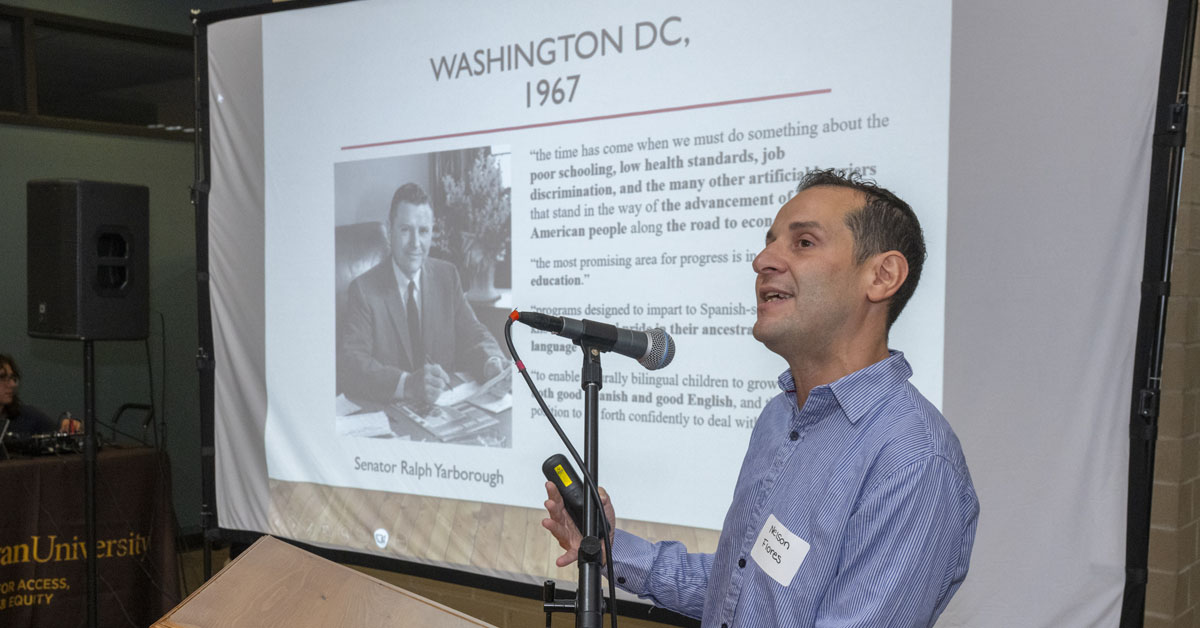
The morning keynote was delivered by Nelson Flores, Ph.D., professor of educational linguistics at the University of Pennsylvania and author of “Becoming the System.” In his talk, Flores used bilingual education as a lens to examine how race, language and power have historically shaped educational policy.
But why study bilingual education in this context? Flores explained: “Bilingual education can help us to understand race in the post-Civil Rights era, it can also help us in the movement toward multicultural populism.” After tracing the evolution of bilingual education from its bipartisan support in the 1960s to restrictive policies in later decades, Flores challenged attendees to consider how well‑intentioned reforms can become embedded within systems that reproduce inequity.
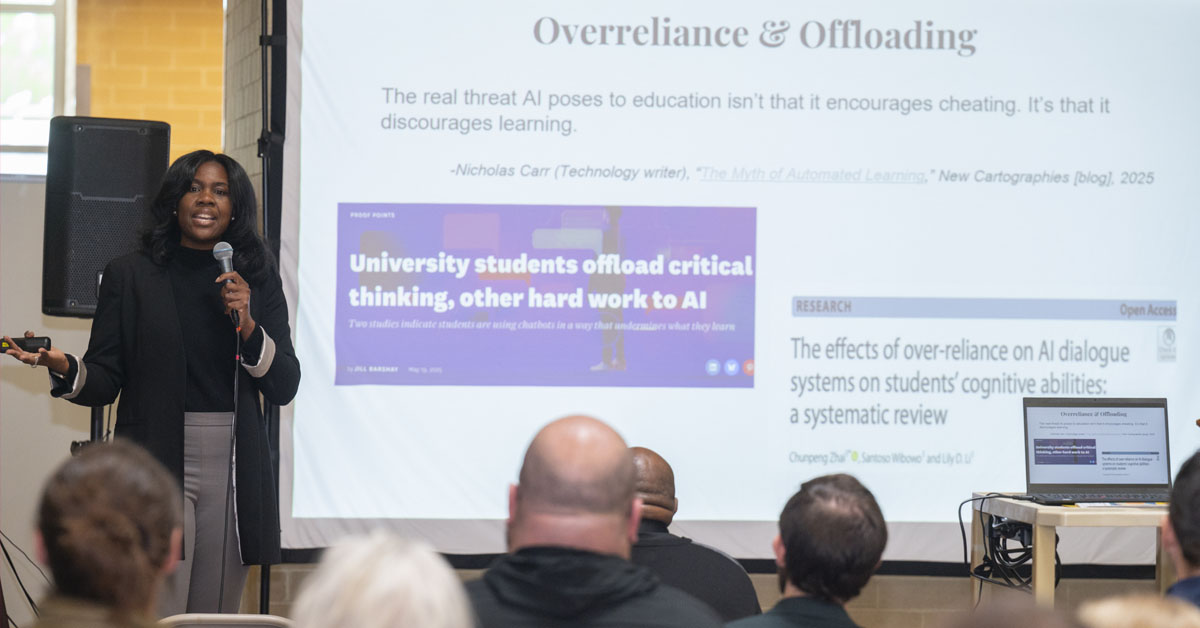
Following the keynote, participants attended morning breakout sessions, including “Critical AI in K–12 Classrooms: A Practical Guide for Cultivating Justice and Joy,” led by Stephanie Smith Budhai, Ph.D., of the University of Delaware, and Marie Heath, Ed.D., of Loyola University. Drawing from their Harvard Education Press book of the same name, Budhai and Heath examined the racial, economic and social biases embedded within artificial intelligence tools used in education.
The session challenged the assumption that AI is neutral, illustrating how algorithms can reinforce stereotypes and inequitable practices, from biased grading feedback to facial recognition systems that fail to accurately detect Black faces. “Technology has the values of its day,” Heath noted, while Budhai urged educators to be purposeful in technology use, asking, “If it’s not helping students reach learning objectives, why are we using it?” The presenters encouraged educators to adopt critical consciousness, practice technoskepticism and engage students in thoughtful conversations about when—and whether—AI should be used.
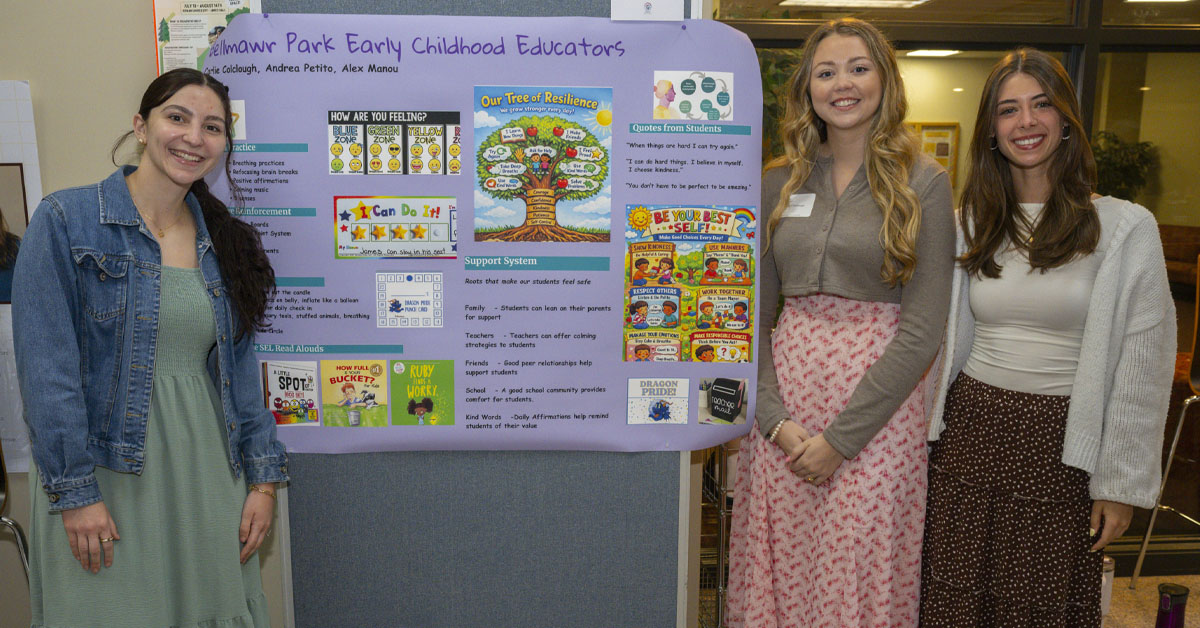
Additional breakout sessions throughout the morning explored a wide range of topics, including preparing K–12 students for the future workforce, fostering inclusive professional learning communities for teachers, leading school districts through change, advancing climate change education, supporting immigrant education, diversifying classroom libraries and strengthening community‑engaged research partnerships. Participants also engaged with the Project THRIVE Showcase, featuring poster presentations from educators participating in a year‑long instructional coaching initiative aimed at supporting teacher growth and retention.
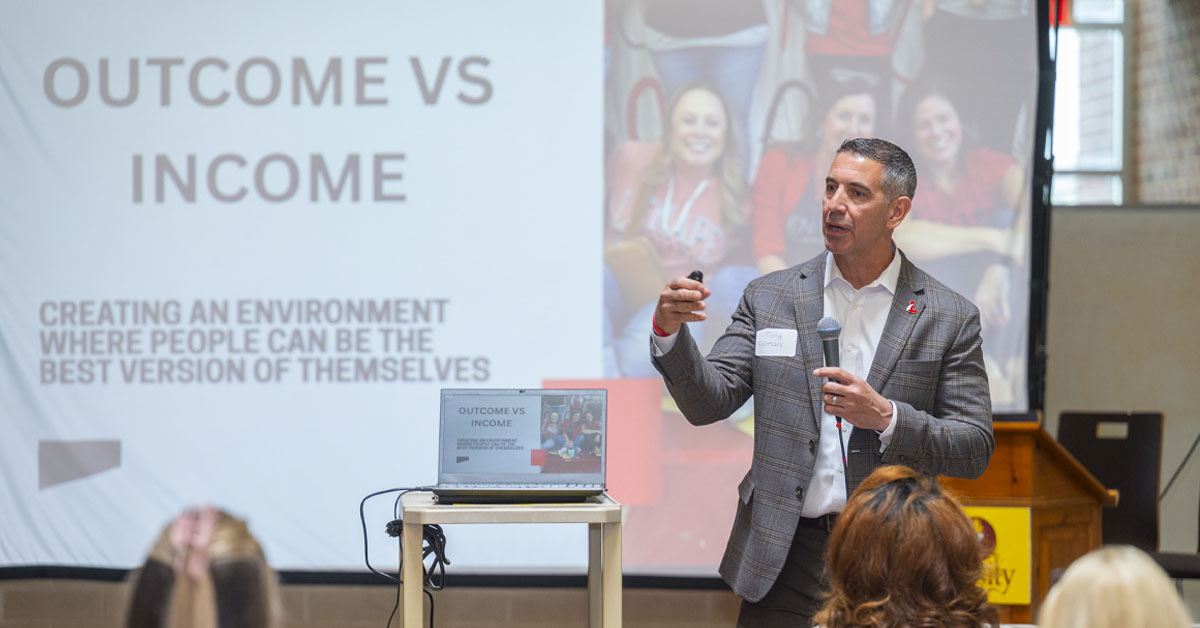
The summit concluded with closing remarks from Tony Cattani, principal of Lenape High School, 2025 National High School Principal of the Year and the College of Education’s 2026 Commencement speaker, who reflected on leadership, collaboration, and the real‑world impact educators have in their schools and communities.