Death Valley field camp brings geology lessons to life for Rowan students
Death Valley field camp brings geology lessons to life for Rowan students
April 8, 2026
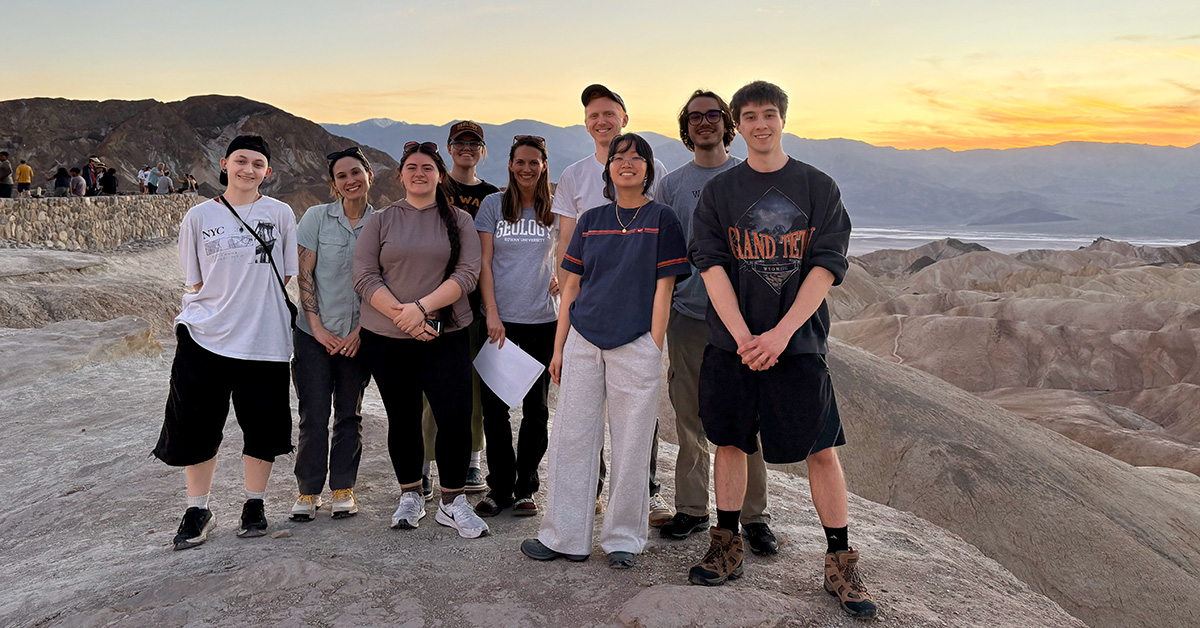
From left: Jay Turner, Ashley Holland, Angelena Revas, Theresa O'Neill, Dr. Lily Pfeifer, Dr. Aaron M. Barth, Theresa Nhu Y Huynh, Oliver Conrad and Nick Giannini pose for a photo during their field camp experience at Death Valley National Park.
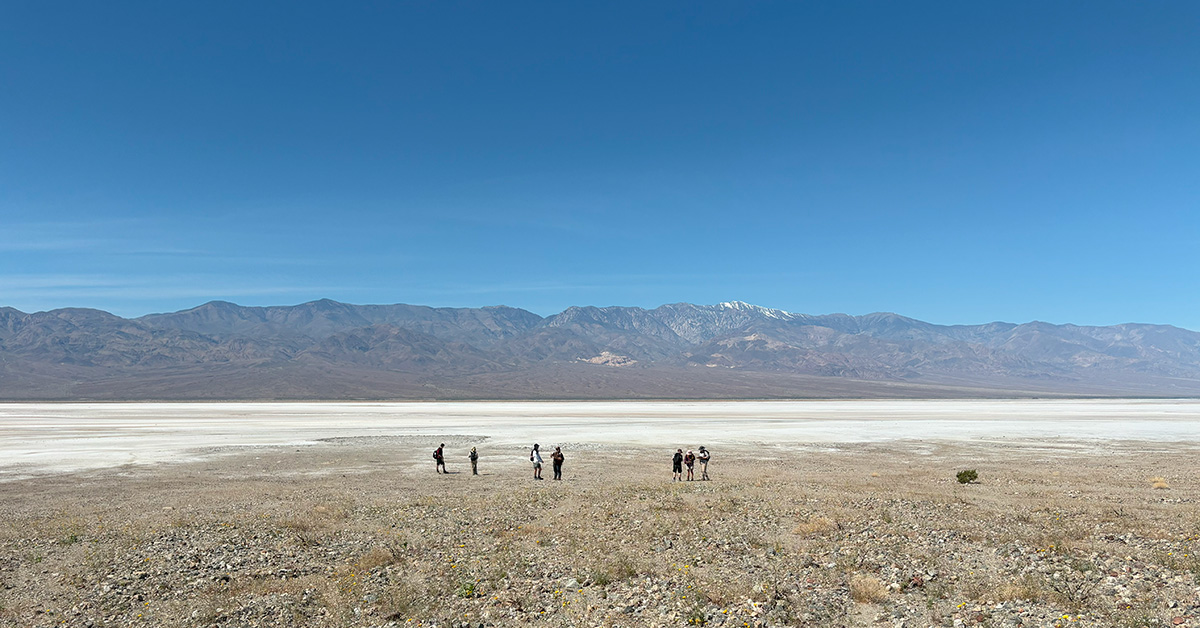
When Nick Giannini learned he could spend spring break in Death Valley, one of the most geologically rich places on Earth, he knew it was an opportunity he could not pass up. A senior geology major in the School of Earth & Environment, Giannini understood the trip would fulfill his field camp requirement and pave the way toward graduation in May.
After nearly a week of camping, hiking, exploring and bonding with six classmates and geology professors Aaron Barth and Lily Pfeifer-Johnson, Giannini discovered an appreciation for geology he had not thought possible. The trip was made possible by a generous donor’s gift to the Rowan University Foundation to create innovative learning opportunities for students. The following conversation has been edited for clarity and brevity.
Q: What was the goal of the expedition?
A: We wanted to understand the geology and tectonics of Death Valley. We wanted to discover what was driving subsidence and mountain uplift in the area. It's a very tectonically active place, but our main goal was understanding the history of it.
Q: What does the field camp requirement entail as a part of the geology program?
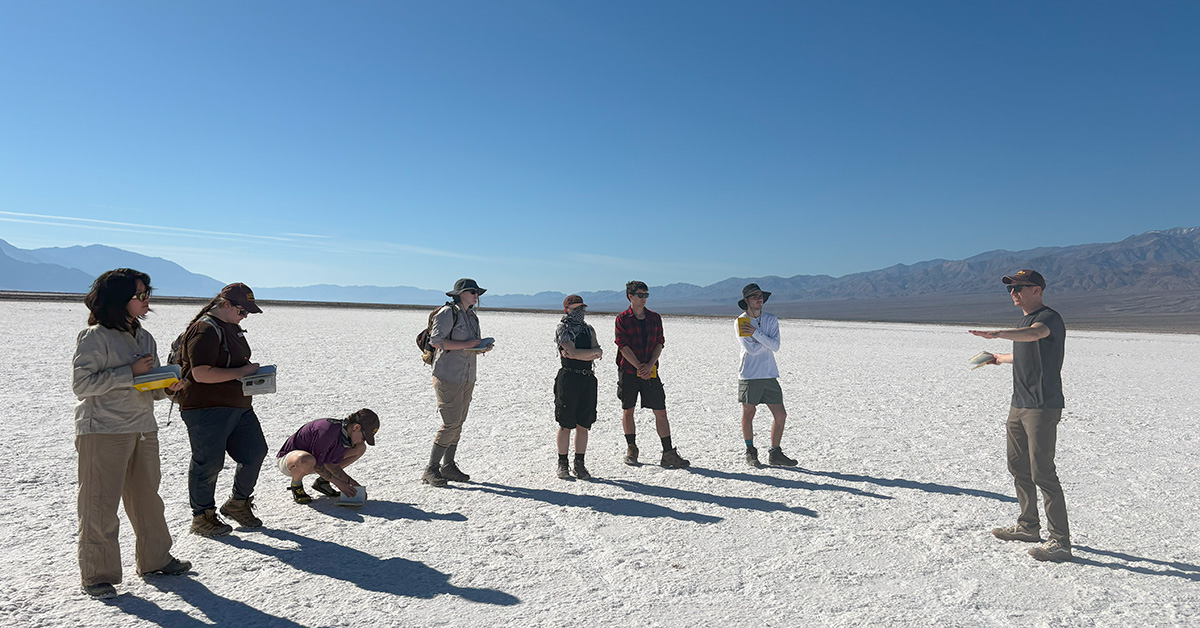
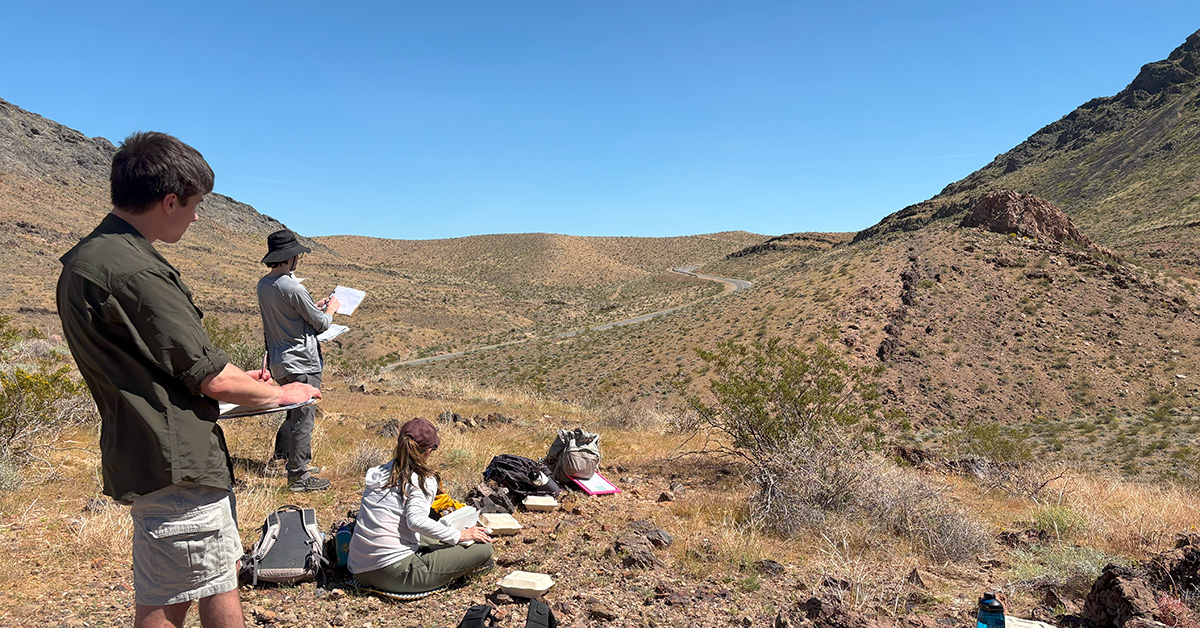
A: Every geology major needs to have a field camp. Normally, you can complete it through different schools, but this is the first year Rowan offered the option. It's very important for a geologist to be out in the field. You have to see what you study out in the real world, right? You go out, you do mapping exercises, you take a look at the geology of the area and try to learn about it and piece it together. Then there are assignments that come with the field work as well.
Q: Did this trip change your perspective on geology?
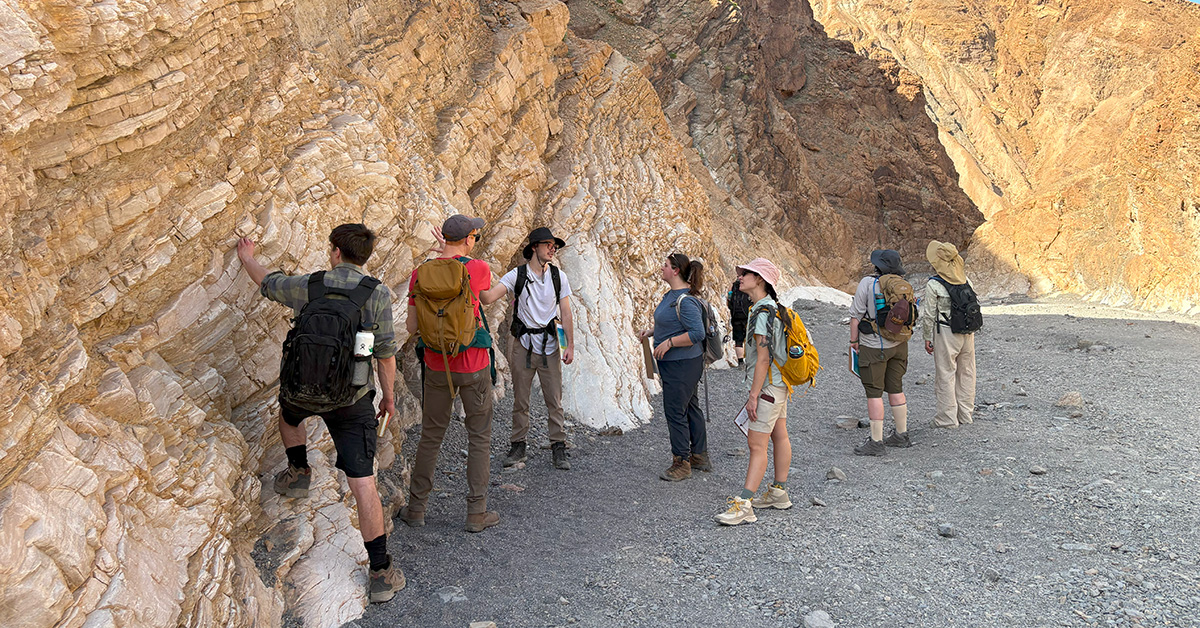
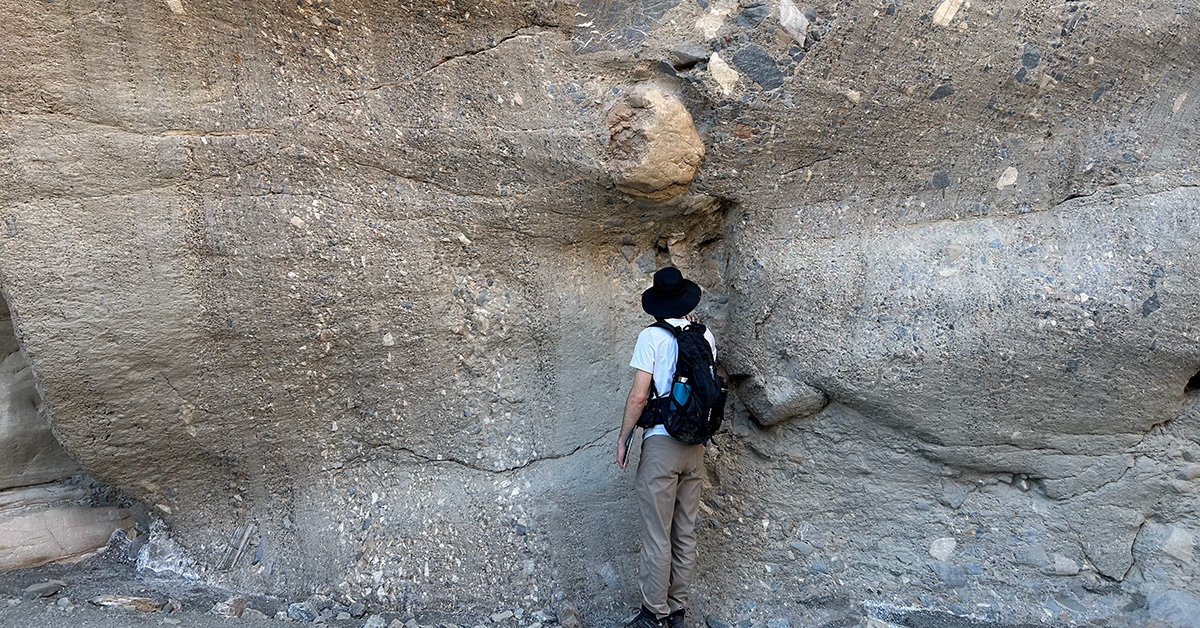
A: Yeah, absolutely. There's only so much you can do where you are in the classroom, and geology is a very location-based thing. Out west, where it's real geology happening. Normally, we're used to seeing things in hand samples in the classroom and, if anything, we see pictures. We were hiking through Mosaic Canyon, and to go out there and see something like that, it was incredible. I understand why it's a requirement for graduation, because it changes your perspective being out there. And it definitely solidified for me that this is 100% what I want to do as a career.
Q: How did your classroom learning translate to the field work?
A: I was joking with everyone on the trip and said, “I can see this. It's the lecture slides. The exams are in front of me.” I think that speaks to our professors. They've done an incredible job. This entire geology department is amazing, getting us prepared for this trip throughout the years that we've been students. Everything came together in this one trip that we've been learning, and you can see it; you saw stuff that we have learned about forever.
Q: What did you learn about yourself on this trip?
A: Out there, it's like putting together a puzzle and solving a problem. I enjoyed that so much, the mystery of the area and figuring out what happened here. It's like an investigation of the geology, and I realized how much I love that. It is definitely something I want to take with me into my career.