Caring for your pet’s dental health
Caring for your pet’s dental health
March 18, 2026
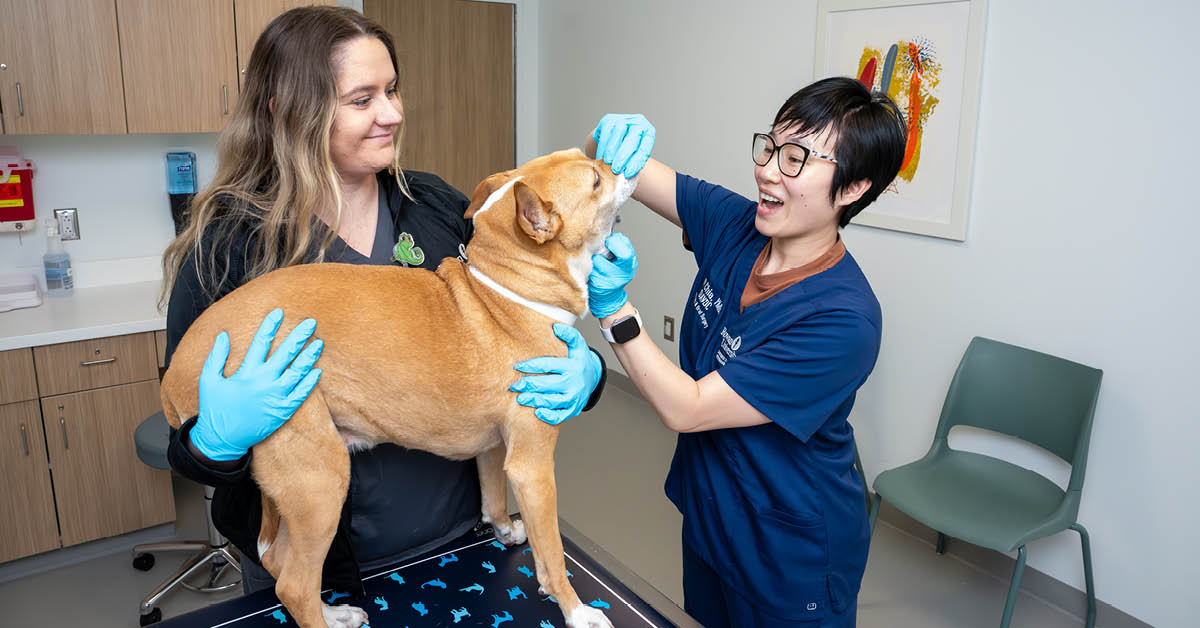
Dr. Han Chia (right) conducts a routine dental exam
Proper dental care can keep the pet in your life healthy and happy - but where do pet owners begin? Rowan Today writers sat down with Dr. Han Chia, clinical assistant professor of dentistry and oral surgery at Rowan University’s Shreiber School of Veterinary Medicine to get the do’s and don’ts of caring for your pet’s teeth. As a DVM passionate about veterinary dental education for students and pet owners alike, Dr. Chia clears up common misconceptions and explains why proactive dental care is essential for every pet lover.
See Dr. Chia and the rest of the dentistry and oral surgery team at the Veterinary Teaching Hospital at Shreiber School, now open and taking appointments.
What is veterinary dentistry? What does it cover?
We are general dentists, which a human would see at your annual or biannual cleaning. We do all the things a dentist or dental hygienist does. However, advanced procedures like root canal or oral surgery, orthodontics, facial trauma or reconstruction, and oncological surgery - those are things that we actually do under our care. Compared with human medicine, we combine all the dental specialties into one
Are there any misconceptions or misunderstandings about veterinary dentistry or pet dental health?
Quite a lot, actually. One rumor I hear is that people think dry food is better than wet food for the dental health of your pet. There’s actually no study that has shown a significant difference in buildup overtime to indicate one is better than the other. Your pet’s daily habits and genetics are the most important things there.
Also, at the store there is a whole aisle of raw hide and nylon bones and things like that, which people think are great for dogs’ teeth. It’s important to note that a dog doesn’t understand when it’s chewing too hard, so a lot of the time those bones or antlers or bully-stick-type products can actually end up breaking teeth. Harder does not mean better. A good rule of thumb for a chew is something malleable in your hands – if you can dig your thumbnail into it and make a dent, that chew or toy is okay.
Another common one is the tennis ball for dogs. The fuzz on the outside of a tennis ball can act like sandpaper and wear down the tooth. As a doctor, you can look at a pet’s mouth and know the toy and chewing patterns based on the wear of the teeth.
What are the most common problems you see in pets?
In dogs, the most common thing we see is periodontal disease. Studies have shown that by age two, 80% of dogs will have some level of periodontal disease. That is why it’s so important to follow up and talk to your primary care doctor to see what’s best for your dog.
In cats, we commonly see something called feline resorptive lesions. The process is like a cavity where the body is slowly eating away parts of the body and eventually exposes the nerve. If you’ve ever had a cavity, you know that can cause sensitivity and be very uncomfortable when chewing.
What signs or behavioral changes should pet owners look for that could point to a dental problem?
I often wish our pets could just tell us their tooth hurts, but unfortunately both cats and dogs do a good job of hiding their pain. Yes, it is uncomfortable for them, but the level of pain is low and kind of in the background, so they usually won’t show any signs at the early stages. Sometimes, in more advanced cases cats will drop or even growl at their food – but usually they are pretty good at hiding it. Unfortunately, most pets we see come to use when their dental disease is already advanced and needs more complex care. This makes your annual exam with your veterinarian very, very important.
How often should your pet go for a dental checkup or screening? What does that visit look like?
Based on the AVMA and AVDC, once per year is the recommendation for general populations. However just like people – every pet is different. There are some pets that require more frequent visits. It is best to talk to your primary veterinarian about what is best for your pet and about home care. Consistent care at home can help prevent the progression of periodontal diseases.
Typically, we will divide a dental consultation into two visits. The first we look at the pet’s overall health and ensure they are a good candidate for anesthesia. We also examine the entire head and neck region to make sure there’s nothing going on there. We’d then bring them back in for a second visit where the pet is placed under anesthesia for thorough dental cleaning, exam and treatment.
What type of dental care can pet owners do at home?
This is something we talk about every day! Ideally, you want to brush your pet’s teeth every day, but science has shown that even three times a week will have similar benefits. My recommendation to pet owners is always every day to help build the habit and get your pet familiar with brushing.
The best way to approach it is to go slow. Break it down into steps. The first couple days, you might only get your pet to lick the toothbrush or the toothpaste. Once they are comfortable with that, then try putting the brush in their mouth or handling their lip. You want them to be comfortable with you handling their face and opening their mouth. Once you achieve that step, you can start gently brushing the incisors and front teeth and make your way to the back. My advice is to make it a ritual – at the end of the day when you’re watching TV, try taking these steps during commercial breaks to ease you and your pet into the habit.
What tips would you offer pet owners concerned for their pet’s dental health?
It really comes down to two things – brush their teeth and keep up with your annual visits. That’s the answer. Start your pet young if you can when it can be easier to train and get them used to things. By looking at your pet’s mouth, teeth and gum regularly, you’ll get to know what’s normal for them and be able to spot change early signs of dental issues sooner.
What drives your passion for veterinary education? What do you hope to share with your students at Shreiber School?
Well first, I do think veterinary dentists are some of the nicest people I have ever met – just so genuine, humble and nice. I initially went into school thinking I wanted to be a GP (general practitioner), but through a dentistry rotation I did, I learned so much and became interested in the field. You see how a patient recovers from pain and comes back eating healthy and happy again – and that’s where everything got started for me.
For the education aspect, I think dentistry is kind of an up-and-coming field. There are some portions really lacking in dental education, but we have the opportunity at Shreiber School to build it a little differently and fill that gap of what has been missing. My goal is for students to leave school ready to take on cases and not be afraid to ask questions. I think as new doctors, there is a lot of fear or hesitation. I’m hoping with a good foundation of knowledge and plenty of hands-on experiences, we can calm some of those fears and prepare them to take on challenges.
The above Q&A was written with assistance of AI using testimony given by Dr. Han Chia, clinical assistant professor of dentistry and oral surgery at Rowan University’s Shreiber School of Veterinary Medicine.