South Jersey Institute for Population Health awards $350,000 for regional research
South Jersey Institute for Population Health awards $350,000 for regional research
March 31, 2026
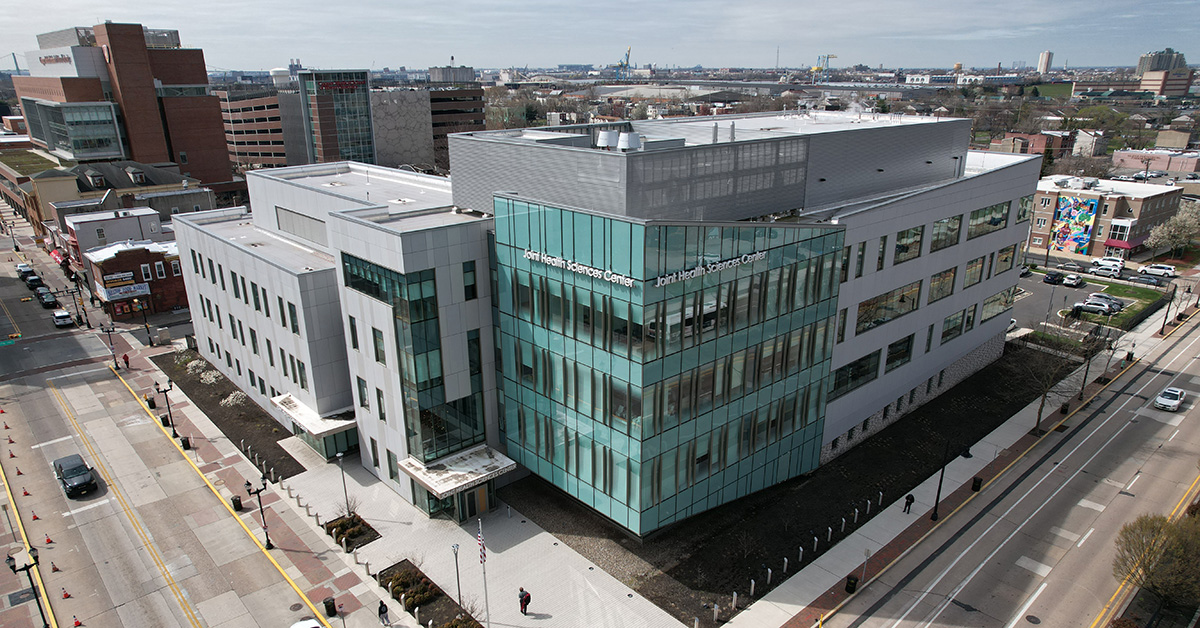
Joint Health Sciences Center in Camden, New Jersey.
The South Jersey Institute for Population Health (SJIPH) has awarded $350,000 to 12 collaborative research projects as part of its fourth annual funding cycle. Led by Rowan University, Rutgers University–Camden and community-based partners, the funded initiatives address key health disparities across South Jersey—ranging from food access and aging to chronic disease, environmental vulnerability and community well-being.
“The innovative research and community-engaged projects supported through this funding targeted for rural areas will contribute to a deeper understanding of health challenges facing residents of southern New Jersey and help advance evidence-informed, locally driven public health solutions,” said Nicole A. Vaughn, Ph.D., an associate professor of public health and wellness and the Rowan University co-lead for SJIPH.
Below are highlights of newly funded, Rowan-led projects.
Salem City Healthy Food Market ProjectLead: Garrett Broad, Ric Edelman College of Communication, Humanities & Social Sciences
This project develops and evaluates an informational text-message intervention for adults and families in Salem, aligning with the opening of the new Salem City Healthy Food Market. The study tracks changes in fruit and vegetable consumption, nutrition knowledge, and self-reported health outcomes over six months to promote healthier eating and improved community well-being.
Nourishing Change: Assessing the Benefits of Fresh, Wholesome Meals for Homebound SeniorsLead: Dara LoBuono, Virtua Health College of Medicine & Life Sciences
This longitudinal study examines health outcomes among homebound older adults in Salem County who recently transitioned from processed “heat and serve” meals to medically tailored, whole‑foods‑based “scratch-made” meals prepared by Meals on Wheels of Salem County. Researchers will evaluate cardiometabolic markers, diet quality, quality of life, cost-effectiveness, and client satisfaction.
Listening to the Water: Indigenous Cultural Relationships, Access and Well‑BeingLead: Angela Beale-Tawfeeq, College of Education
This community-engaged qualitative study partners with Citizens of the Lenni-Lenape Tribal Nation and other Indigenous stakeholders to explore cultural, spiritual, and lived relationships with water in South Jersey. Through listening sessions and narrative-based focus groups, researchers will document how water access, safety, and cultural identity intersect to shape community well-being and inform future culturally grounded policy and programming.
Climate Strain on Health Care Access: A Multicounty Assessment of Health Care Infrastructure Vulnerability in South Jersey
Lead: Qian He, School of Earth & Environment
This project examines how climate-driven flooding and infrastructure disruptions affect health care access in Cape May, Cumberland, and Salem counties. By integrating hospital utilization data with flood risk zones, federal climate projections, road-network analysis, and human mobility patterns, the study identifies “climate–health access gaps” to support emergency planning and the development of more resilient health care systems.
Arts Prescription in a South Jersey Pain Management Clinic: Pilot Study and Impact Assessment
Lead: Morgan Yacoe, George Family Center for Healing Arts, College of the Arts
This pilot study evaluates the feasibility and impact of integrating arts prescribing into chronic pain management. Participants will attend community-based arts classes, while researchers assess effects on mental well-being, social connection, physical functioning, and the practical considerations for implementing arts-based interventions within clinical care settings.
Empowering Communities Through Self‑Monitoring of Blood Pressure: A Scalable Model for Hypertension Management
Lead: Yupeng Li, Ric Edelman College of Communication, Humanities & Social Sciences
This community-based program, developed in partnership with the Gloucester County YMCA, equips participants with the skills and support to monitor their blood pressure at home. Participants attend biweekly in-person coaching sessions at the YMCA to review readings and receive support, along with monthly educational seminars focused on nutrition and healthy eating. The study evaluates engagement, health outcomes and cost-effectiveness to inform the development of a community-centered model for improving hypertension control across South Jersey.