Immigration issues in New Jersey: A conversation with political analyst, Ben Dworkin
Immigration issues in New Jersey: A conversation with political analyst, Ben Dworkin
March 23, 2026
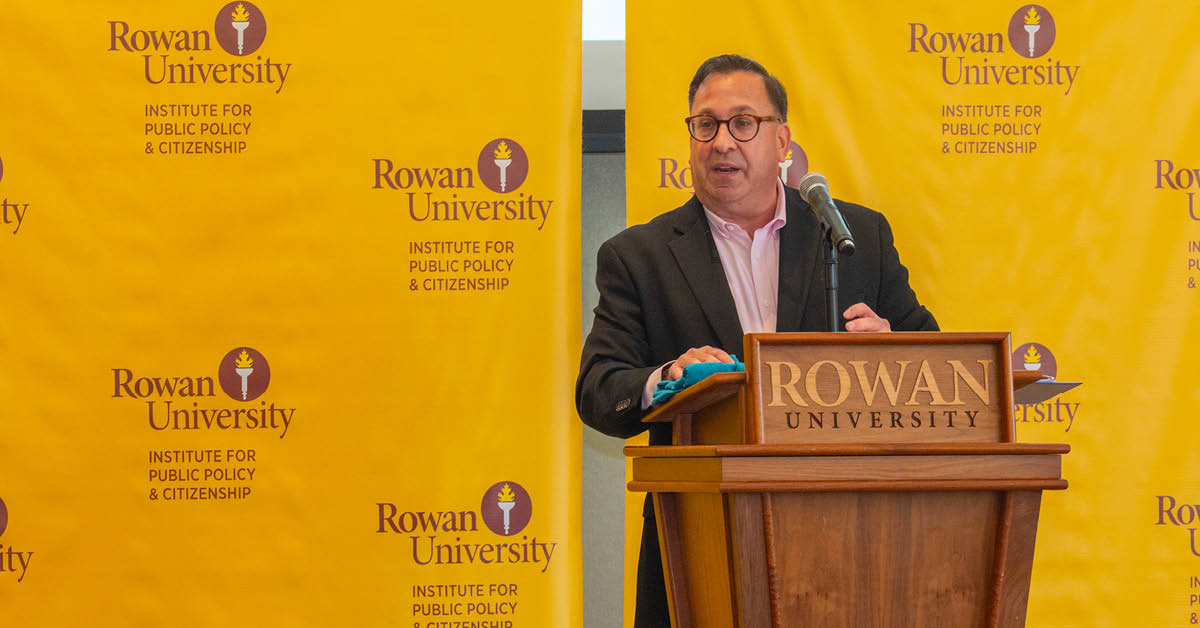
Ben Dworkin, director of Rowan Institute for Public Policy & Citizenship
Immigration policy has become one of the most consequential and politically charged issues facing New Jersey. With nearly a quarter of the state’s residents born outside of the United States, changes in federal immigration enforcement are no longer distant developments, they are felt immediately in communities across the state.
In this environment, lawmakers, municipal leaders and residents are navigating a complex and contentious landscape. To help clarify the key dynamics at play, Rowan University professor and New Jersey political analyst Ben Dworkin, director of Rowan Institute for Public Policy & Citizenship, offers insight into the legal, political and practical forces shaping the State’s immigration debate.
Why does it seem as though immigration policy is becoming even more of a major issue in New Jersey?
Immigration has become a defining policy challenge because New Jersey has one of the nation’s largest immigrant populations where nearly 25% of residents are immigrants and approximately 450,000 are undocumented. This makes federal immigration enforcement, ICE operations and state immigrant policy highly consequential for local communities.
The very public arrest of the U.S. Representative LaMonica McIver outside Delaney Hall (New Jersey’s largest immigration detention center) further elevated the public’s attention. Combined with national controversies, including the federal immigration crackdown in Minnesota and the death of Renee Good and Alex Pretti, tensions between federal and state governments have intensified and deepened mistrust between some state and federal officials nationwide.
How are federal-state conflicts shaping immigration enforcement in New Jersey?
Debates over immigration enforcement authority hinge on constitutional interpretation. The federal government relies on the Supremacy Clause, which established that federal law overrides conflicting state and local actions. For their part, states often turn to the Tenth Amendment, which prevents Washington from forcing state personnel to carry out federal duties, including immigration enforcement. The courts have not fully clarified how these principles apply to today’s debates, which means the issue will likely generate further litigation.
What actions has Governor Mikie Sherrill taken regarding ICE activities in the state?
New Jersey Governor Milkie Sherrill’s executive order on immigration significantly shaped the current debate in the state. It restricts ICE access to state property and bans the use of that property from serving as a staging area, processing location or operations base for ICE activities. She also created a online portal allowing New Jersey residents to upload videos of ICE operations.
Some New Jersey lawmakers argue that the Governor’s actions worsen tensions, which underscores the political and policy debate around how far state cooperation with ICE should extend.
What immigrant legislation is advancing in New Jersey?
Democratic legislators have proposed several bills that would reshape New Jersey’s immigration law.
- Codify the Immigrant Trust Directive - This measure seeks to put into the law the existing directive limiting voluntary cooperation between local police and federal immigration authorities. Supporters say doing this would make the ideas of the directive less vulnerable for reversal by future administrations. Some immigrant advocates argue the bill does not go far enough, especially for individuals who have been adjudicated for violations but have not exhausted their appeals.
- Ban on ICE agents wearing masks – This transparency-focused bill addresses public concerns about anonymity in federal immigration operations.
- Increased privacy protections for immigrants - The legislation aims to expand safeguards for immigrants who share personal data with public agencies or hospitals.
Other, Democratic-led states including Maine, Massachusetts and New York have enacted or proposed similar state-level immigrant protections. These initiatives reflect both policy motivations and political pressures.
What does the future look like for immigration policy in New Jersey communities?
Even as it pursues strict enforcement of immigration politics, the Trump administration is also trying to ensure that farms can find the necessary labor needed, especially for seasonal (as opposed to year-round) harvesting. In this difficult balancing act, the federal government has incentivized farmers to use the H-2A visa program, allowing for an increased number of foreign farm workers to enter the United States and lowering their hourly wage.
According to an NJ.gov report from 2024, some 28% of New Jersey’s farm workers were foreign-born. Under this expanded program, that number should increase, thereby limiting opportunities and wages for those U.S.-born farm workers willing to work in fields.
An additional area of debate will be the question over the federal government’s intention to increase the number of immigrant detention centers across the county by converting warehouses into such facilities. In Roxbury, NJ, one such warehouse has been bought by ICE, much to the frustrated opposition of the local town council, and others. Depending on how long and hard this opposition becomes, there are significant political implications for Sherrill, the county and local governments, and Republican Congressman Tom Kean, Jr.
Regardless of ongoing lawsuits or new laws, immigration enforcement will continue influencing local government operations. Communities must continue navigating complex intersections of law, federal-state relations, local governance, public safety and immigration politics.
The above Q&A was written with assistance of AI using written testimony given by Dr. Ben Dworkin, director of RIPPAC.