Exploring cell communication with 3D printing
Exploring cell communication with 3D printing
March 20, 2026
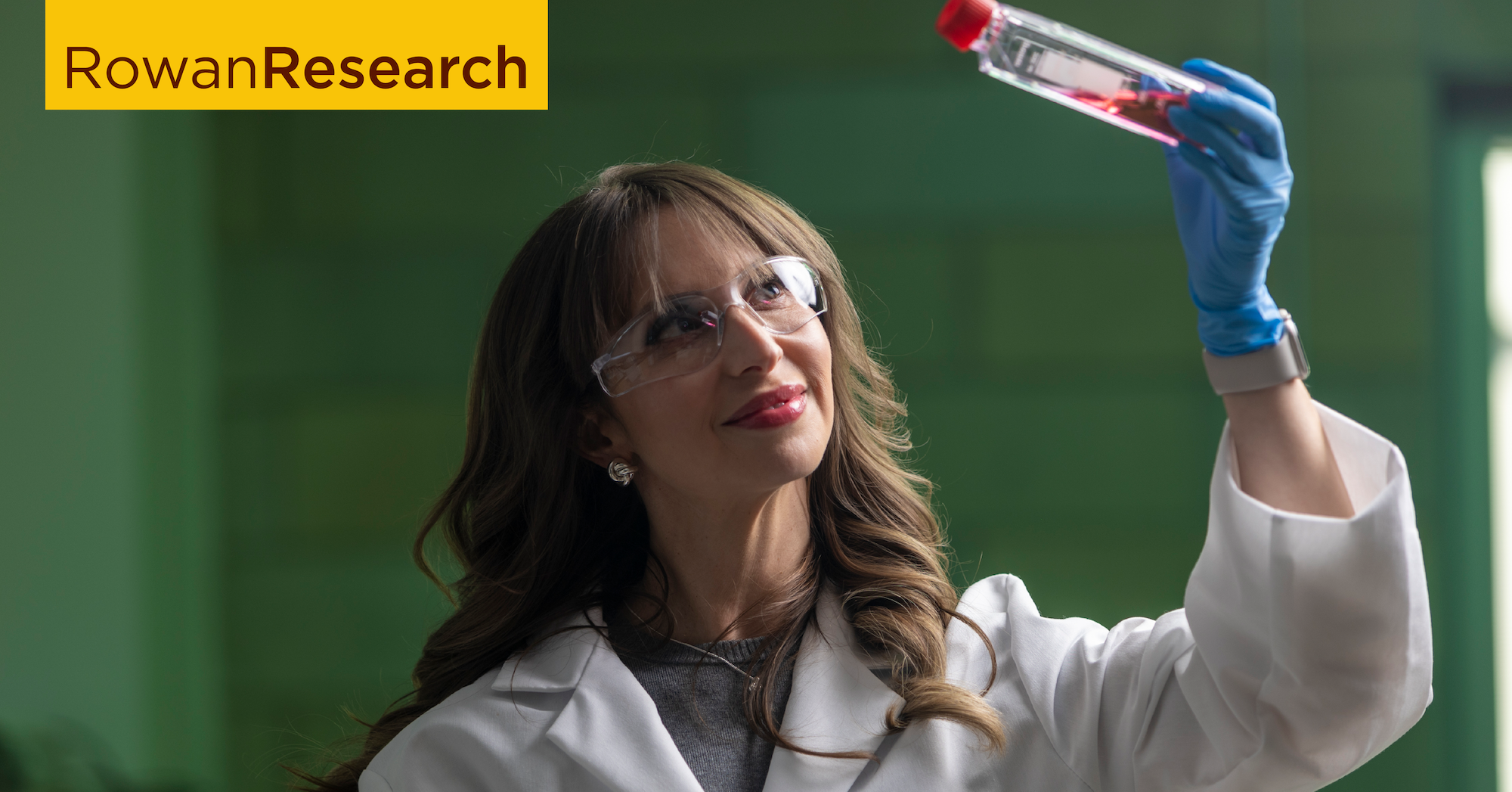
Andrea Vernengo studies the messages cell send and receive.
Andrea Vernengo, Ph.D.
Chemical engineer
Areas of expertise:
Biomedical engineering, biomaterials, biofabrication, cell-based strategies
In the body’s tissues, cells coordinate with one another constantly. Andrea Vernengo, Ph.D., associate professor of chemical and biomedical engineering in the Henry M. Rowan College of Engineering, studies the messages they send and receive by suspending cells within soft substances, called hydrogels. With this approach, which relies on 3D printing, her lab studies wound healing and cancer, with the aim of discovering new therapies.
“In many physiological processes, cells coordinate and communicate with each other through chemical signals,” Vernengo says. “We use biomaterials to recreate these processes in a controlled way.”
To study wound healing, her lab focuses on mesenchymal stem cells, which regenerate tissues including bone and cartilage. The signals these cells send to one another could one day become the basis for new therapies that, for example, promote the growth of the protein collagen in the skin or healing in orthopedic injuries. They could also kick-start healing in patients in whom this process is impaired, she says.
For cancer, they are focusing on chondrosarcoma—a rare type of cancer that develops in bone. Her lab wants to know if communication between the cancer cells and mesenchymal stem cells determines whether a tumor becomes more aggressive.
Using a specialized 3D printer, her lab prints 1-cubic centimeter blocks of hydrogel. Each one contains 500,000 to a million cells, which lab members study using imaging and biochemical tools.
In addition to scientific insights, Vernengo aims to produce marketable products. As a participant in the National Science Foundation’s Innovation Corps, which trains scientists and engineers to become entrepreneurs, she has learned how to commercialize her work. “I believe in the process of identifying real world needs, validating them, and then letting those insights shape the studies I do in the lab,” she says.