Super Bowl Ads in 2026: What’s changed and what still works
Super Bowl Ads in 2026: What’s changed and what still works
February 5, 2026
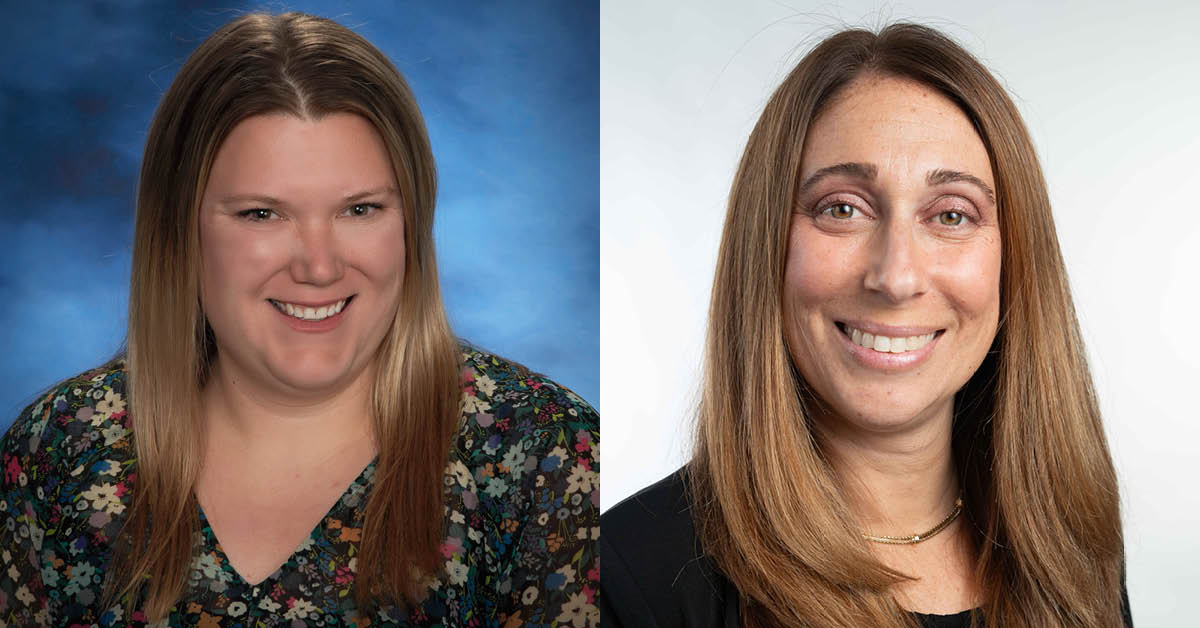
Julia Richmond, assistant professor of public relations and advertising, and Lindsey Masciangelo, assistant teaching professor of sports communication and media
As Super Bowl LX approaches, many fans are finalizing plans for the biggest nationally televised event of the year, with last year’s game averaging a record 127.7 million viewers, according to the NFL. For some, though, those plans involve watching more than the game. In 2024, Ipsos reported that 78% of viewers watch Super Bowl ads, with nearly a quarter watching intently.
A writer for Rowan Today sat down with two Rowan faculty members, Julia Richmond, assistant professor of public relations and advertising, and Lindsey Masciangelo, assistant teaching professor of sports communication and media, to discuss the intrigue and popularity of Super Bowl commercials.
What drives the interest in Super Bowl advertising? Why is it such a big deal?
Richmond: The Super Bowl is one of the most-watched live events of the year. It is a rare moment when viewers come together to watch the same content at the same time. Then, you also have the investment. I looked it up today: $8 million for 30 seconds. These companies are investing millions for 30 seconds of your time. [Advertisers] have an interest in making sure they're cutting through the clutter of expected advertising to spark conversations about their brand.
Masciangelo: This goes back years and years – I think people have always been interested in Super Bowl commercials because the biggest brands want to advertise, and they've always produced interesting commercials. Seeing brands that want to tie themselves to the Super Bowl has become a trend. With social media, that trend is even bigger. People want to see what advertisers are going to do next. Is it going to be the same as it's always been? What's the new company that's going to join the scene?
What role could AI play in Super Bowl commercials?
Richmond: First, AI is already part of advertising, which could be through personalization, analytics or content creation. With that said, if you look at consumers right now and where they are situated with AI, there is a lot more concern than there is excitement. If a brand uses AI, there needs to be something innovative in the storytelling…maybe having a human interact with AI and then misunderstanding it. If you're just using AI for AI's sake and saying, ‘Oh, look at what we did with AI,’ I think that's going to be read as if you didn’t have the finesse to pull it off.
Masciangelo: I think people are looking for it. They're looking to see, ‘Is that AI-generated?’ I do think that a lot of the brands that advertise in the Super Bowl are those that have been around for a very long time, and their authenticity is almost more important than some of the newer companies that may not have those expectations. If you've come to expect it and then that company does something AI-generated or something that doesn't feel like them, people see through that right away. So, I think it all comes down to advertisers and brands knowing their audience.
How has social media changed the Super Bowl advertising landscape?
Richmond: Social media is tricky because companies want to organically dwell in the digital space. You can’t advertise on a billboard the same way you would on an Instagram post. Social media, when paired with a Super Bowl ad, can be an effort to continue the conversation; if you want to share more information on something or want to express more about a product. Putting a lot of content on social media doesn’t automatically mean you’re going to get a following. It can be part of the strategy, but it can’t be the whole thing.
Masciangelo: I think companies know now that just because you don't see their advertisement in the Super Bowl doesn’t mean it won’t get traction after the Super Bowl. These commercials are on YouTube before the Super Bowl and they're on YouTube after. Before social media, if you didn't see the TV spot during the game, you missed it entirely. Social media has allowed that advertising budget to go a little bit further for these companies. So now companies are going to spend $7 million on a spot but it's going to have legs.
Do second screen influencer advertiser strategy?
Richmond: Having viewers with two screens to watch TV and scroll on social media is certainly a big piece of sports advertising. This fragmented attention takes eyeballs away from the advertisers who are paying those high premiums for the 30-second spot. A company’s ad might get less attention if more people are texting, betting, or scrolling during commercial breaks. Advertisers will certainly be thinking about how to recapture attention and engage in the second screen spaces with hashtags or digital promotions to motivate viewers.
Masciangelo: When it comes to the Super Bowl, distraction has always been a factor. I think these spots are now developed with the understanding that people can more easily miss a commercial at their watch party and still get a chance to view it afterward. These ads will be viewed over and over again on phones or other devices, and people are going to share them. As a result, advertisers are now creating more sustainable spots that cater to viewership on more than one platform for a long period of time while remaining relevant after the game.
Why do celebrities and influencers appeal to advertisers for these high-profile commercials?
Richmond: I think using an influencer who is rising in an advertiser’s product area has to do with their target audience. [The influencer] might be known to a very small group of people who would buy their product, and their audience would be really excited to see that individual in an advertisement. At the very least, they're recognizing somebody they can trust who's bringing authentic content. To the average viewer, it might not necessarily resonate with them, which makes it kind of a risk. It might pay off, but again, you want to have your strategy that speaks to the big, expensive audience of the Super Bowl.
Masciangelo: Using any sort of celebrity or influencer is always a risk because you have some consumers who are fans of that person and some who are not. There's a reason that they're using a celebrity, but knowing their audience and knowing who they're trying to attract is extremely important. If you're trying to reach a younger audience, you're not going to use a celebrity they may not recognize. If you're trying to reach an older audience, some of these newer influencers may not have the same sticking power.
Are interactive commercials trending? Could they appear during Super Bowl LX?
Masciangelo: The ones that work are authentic. You've seen some contesting, getting people talking about the spot beforehand, but these things sort of lead the generation of ‘let's see how many hits we get.’ But when it's not authentic, I think people can see through that. The most successful ones stay true to who they are. You'll see the Budweiser spots that stick with the nostalgia because it's what's worked for them for years. And when they change it, people complain. ‘What happened to the Clydesdales? Where did they go?’ Some of the newer companies on the scene – tech companies, pharma companies – they may not have ever advertised on that scale before, and their spots might lean toward name and brand recognition.