Unlocking the origins of the Solar System
Unlocking the origins of the Solar System
February 13, 2026
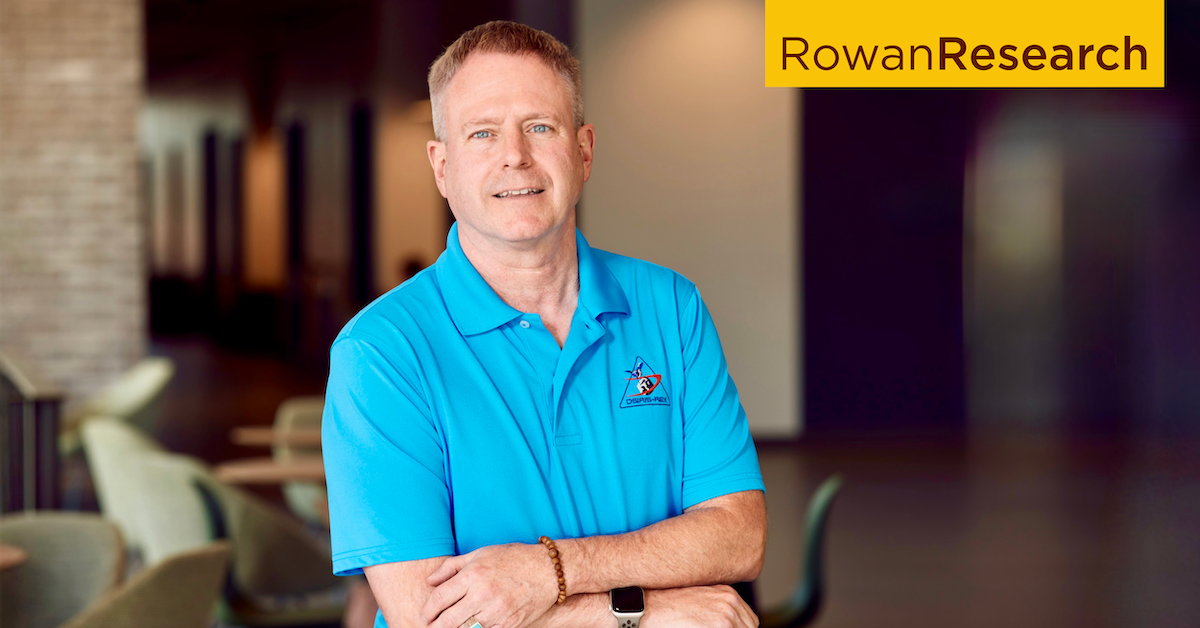
Harold C. Connolly Jr.
Harold C. Connolly Jr., Ph.D.
Petrologist
Areas of expertise:
Petrology, meteorites, asteroids, cosmochemistry, mineralogy
For Harold C. Connolly Jr., Ph.D., a career in geology was practically elemental.
“It’s all I ever wanted to do,” said Connolly, founding chair and professor in the Department of Geology within the School of Earth & Environment and a research associate in the Department of Earth and Planetary Science at the American Museum of Natural History.
Connolly’s passion for geology began at age five, when his grandfather introduced him to rocks and fossils. By ninth grade, inspired by an earth science teacher at Washington Township High School, he had already mapped his future: study geology and teach.
He followed that plan through college, where a professor encouraged him to pursue a Ph.D. and a career in academia. Two senior theses—one on invertebrate paleontology and another on meteorites—helped develop his true fascination: absolute time.
“Meteorites record the age of the solar system—four and a half billion years old,” Connolly explained. “Nothing on Earth is that old.”
Drawn to the beauty and mystery of chondrites—primitive stony meteorites—Connolly’s research explores how these ancient materials illuminate the earliest stages of planetary formation.
“We don’t have pristine samples from Earth’s beginnings,” he said. “But chondrites contain material from before planets formed.”
A quest to learn more led Connolly to positions with JAXA, the Japanese space agency, and to a key role with NASA’s OSIRIS-REx mission. Both efforts returned pristine asteroid samples to Earth.
Connolly, the mission sample scientist for OSIRIS-REx, leads an international research team studying the extraterrestrial dust and rock collected from the asteroid Bennu.
The spacecraft launched on Sept. 8, 2016, aboard an Atlas V rocket from Cape Canaveral, Fla., and rendezvoused with Bennu nearly 80 million miles from Earth on Dec. 3, 2018. On Oct. 20, 2020, OSIRIS-REx executed a complex “touch-and-go” maneuver above the moving asteroid and returned its sample—more than 122 grams of regolith—on Sept. 24, 2023.
“We’ve discovered minerals and salts never before seen in meteorites because they lose these minerals upon landing on Earth,” Connolly noted. “These findings shed light on volatiles like water and prebiotic compounds—key ingredients for life.”
Connolly said the work is as humbling as it is groundbreaking, noting that his research advances planetary science and underscores geology’s relevance on Earth.
“Rocks are the physical evidence of everything that’s happened on Earth,” he said. “Whether in a four-and-a-half-billion-year-old meteorite or from a landslide in Tibet, it all can be preserved in the rock record. Geologists read that rock record and help us better understand our origins.”
Rowan University researchers are passionate about what they do. Find more at Meet Our Researchers.