Therapy Dogs, Education and N.J. Bill A1165
Therapy Dogs, Education and N.J. Bill A1165
December 10, 2025
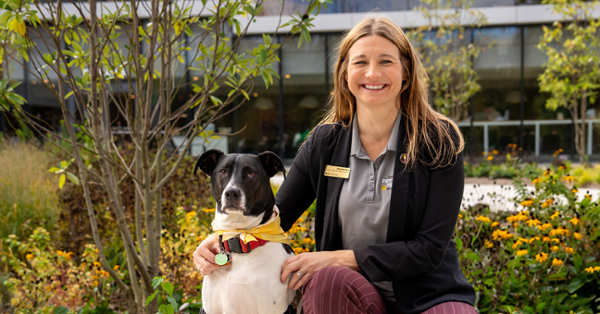
Pich, with therapy dog Ralphie, on campus
A conversation with Michele Pich, assistant director and founding department head of the Shreiber Family Pet Therapy Program of Rowan University and Rowan Today writers. On Nov. 24, 2025, Pich testified at the Assembly Health Committee meeting in support of N.J. Assembly Bill 1165, which could lead to the creation of a pet therapy pilot program in K-12 schools across the state.
Q: Michele, tell us a bit about the Shreiber Family Pet Therapy Program.
A: The Shreiber Family Pet Therapy Program of Rowan University was created in 2019 thanks to the generosity of Gerry Shreiber, founder and former CEO of J&J Snack Foods of Pennsauken and a lifelong animal advocate. The department sits alongside Rowan’s Wellness Center, which provides counseling, student health and emergency medicine services. Rowan views animal-assisted interventions with therapy dogs as integral to student well-being.
Since its inception, our program has served thousands of students, faculty, staff and administrators across six Rowan campuses in South Jersey. Our team includes 60 beings—half of them human, half dog—including my therapy dog Ralphie, ASPCA Dog of the Year and Therapy Dog Ambassador for the National Dog Show. We also rely on 30 credentialed volunteer handler-dog pairs certified and registered through organizations such as Alliance of Therapy Dogs.
Q: The N.J. Senate and Assembly are considering legislation that would create pet therapy pilot programs in select K-12 schools. You testified in support of these efforts. What moved you to do so?
A: In my 25 years as a mental health and grief counselor, professor, trauma researcher and animal-assisted intervention practitioner, I’ve seen therapy dogs deliver measurable benefits: reducing anxiety, improving emotional regulation, increasing academic success and enhancing social-emotional learning.
Research confirms these outcomes—interactions with dogs lower heart rate, blood pressure and stress hormones, while boosting confidence and motivation. With the social learning loss from COVID-19, therapy dogs can help children reconnect, learn and thrive.
I strongly support Bill A1165, with safeguards to protect students, teachers, administrators and the working animals.
Q: What impact have therapy dogs had in schools?
A: The effects are significant. One study found a 23% average decrease in cortisol levels in students after interacting with therapy dogs (Journal of School Psychology).
Superintendent Dan Dooley of Absecon Schools shared that when therapy dogs were present in the school’s “reset room,” students settled emotionally several minutes faster compared to when dogs weren’t there. Over a school year, those minutes translate into more time learning and less time struggling, which helps close achievement gaps.
Q: What safeguards should be included in a pilot program under Bill A1165?
A: Safeguards are essential. A successful pilot should include:
- Permission slips from parents
- Documentation of student allergies or phobias
- Training in canine body language and stress recognition
- Clear plans for space, time and resource needs
- Strategies for when a therapy animal becomes overwhelmed
- Science-backed positive reinforcement therapy dog training techniques that foster the bond between human and animal
These safeguards would ensure the wellbeing of both students and animals.
Q: How can therapy dogs support children with special needs or learning challenges?
A: Dogs don’t require words to communicate, which is powerful for children who struggle to communicate. A middle school teacher and mother of a son with autism told me that dogs provide acceptance without words.
Specialized programs like READ (Reading Education Assistance Dogs) have shown reading fluency improvements of 12–30%. Dogs don’t judge mispronunciations or stuttering—they simply accept the child, which builds confidence and motivation.
Q: What training considerations are necessary for therapy dogs in schools?
A: Training must be positive-reinforcement based, avoiding aversive stimuli. Dogs need preparation for the unpredictable school environment, including:
- Balls thrown at recess that they cannot chase
- Food smells from cafeterias and classrooms
- Medical equipment, crowds and noise
Not every school will look the same. Some may benefit from weekly volunteer visits, while others may support part-time therapy dogs integrated into the school staff. Importantly, dogs should not work full-time hours in schools—they need breaks, quiet spaces and the choice to interact or not.
Q: What role does Rowan’s program play in advancing the field?
A: Rowan has been a leader in therapy dog programming. We host the annual National Dog Show Therapy Dog Symposium at Rowan University, now just finished its seventh year and planning for the eigth, which brings together professionals, educators and volunteers from across the country about animal-assisted interventions and services, which has a national and international audience. This year’s symposium included presentations on therapy dogs supporting students with disabilities and multicultural students for whom English is not their first language, consent and agency of animals in therapy dog work, program evaluation, and discussions of animal sentience.
We work alongside organizations such as Alliance of Therapy Dogs and the Association of Animal Assisted Intervention Professionals to refine certification and credentialing protocols. We collect and analyze program data and contribute to scholarly research, publications, discourse and teaching. We collaborate on therapy dog training classes alongside our training partner, Philly Unleashed. We also follow frameworks like the Therapy Dog Bill of Rights, the 5 Freedoms of Animal Welfare and Dr. Sophia Yin’s socialization checklist, and the American Kennel Club's Canine Good Citizen test to ensure humane and effective practice.
Q: What’s the future vision for therapy dogs in education?
A: Rowan is preparing to expand educational opportunities with additional curriculum options in animal-assisted interventions and services. We plan to launch an animal-assisted education certificate for school professionals and eventually graduate-level programs in partnership with our social work program and potentially our medical schools and veterinary school.
With thoughtful safeguards, collaboration and humane training, therapy dogs can reduce truancy, improve teacher retention, support students with disabilities and close achievement gaps—all while ensuring the wellbeing of the animals themselves.
The Shreiber Family Pet Therapy Program of Rowan University stands ready to guide, train and evaluate pilot programs under Bill A1165. With evidence-based practices and a commitment to both student and animal welfare, therapy dogs can become a transformative force in education.
The above Q&A was written with assistance of AI using testimony given by Michele Pich, assistant director and founding department head of the Shreiber Family Pet Therapy Program of Rowan University.